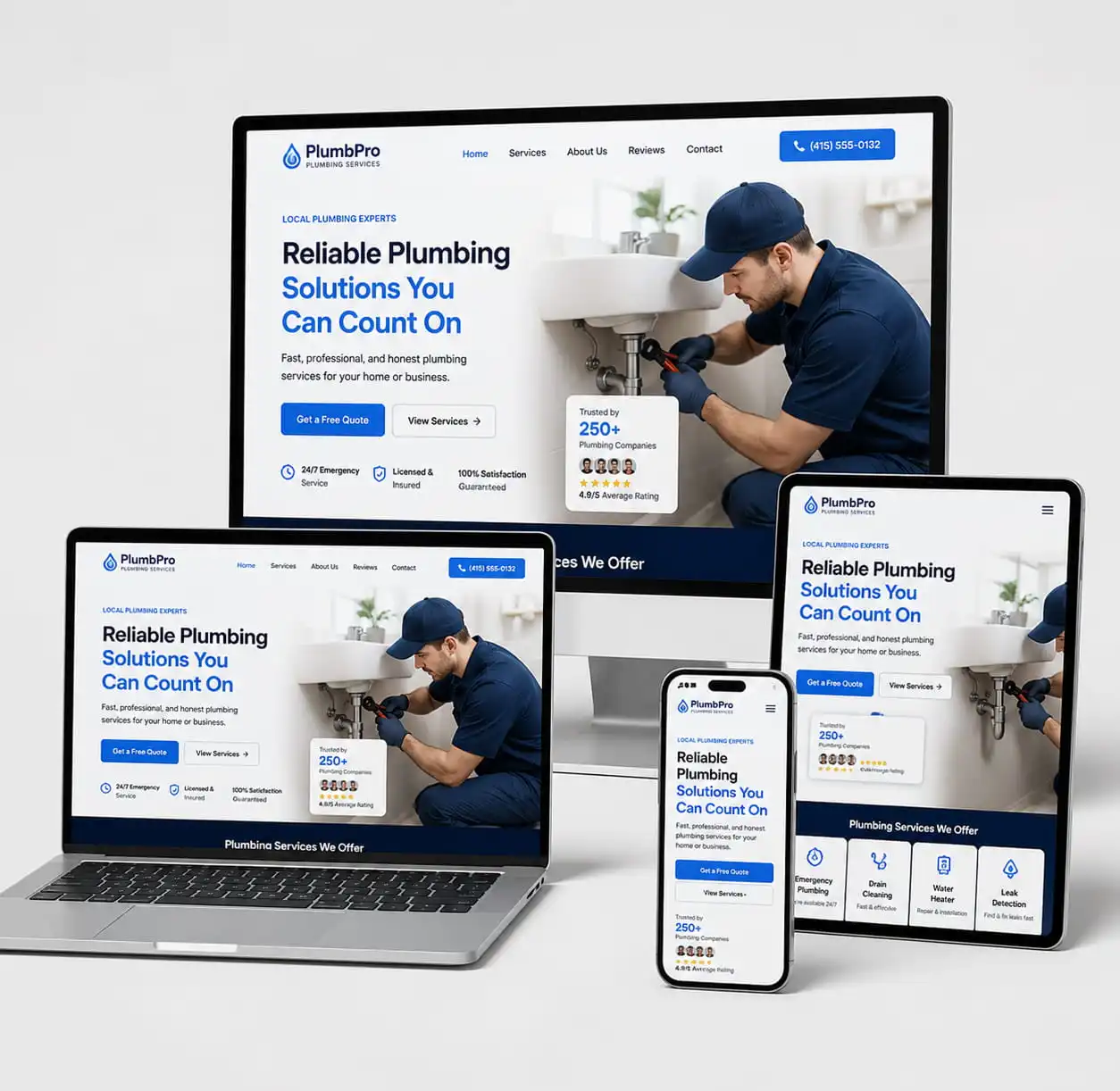
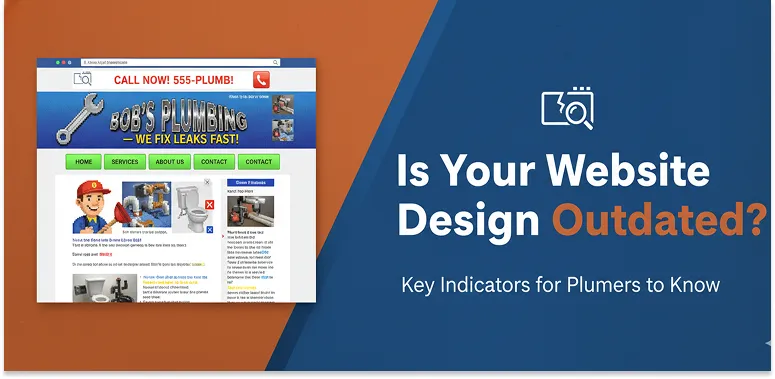
Many plumbing business owners face the same issue—low call volume, inconsistent leads, and competitors gaining more online visibility. Often, the real problem is not the service itself, but an outdated website that fails to convert visitors. A strong website design for plumbing businesses can make a major difference in attracting and converting local customers.
A slow, confusing, or unprofessional website can quickly push potential customers away. When someone searches for a plumber, they expect speed, clarity, and easy contact options. If your site doesn’t deliver this, they simply leave.
In this guide, you’ll get clear, complete indicators to determine whether your plumbing website design is outdated and what might be preventing your business from getting more calls.
What Is an Outdated Plumbing Website?
An outdated plumbing website is not just a site that “looks old.” It usually refers to a website that fails in three key areas and is one of the common website problems small plumbing businesses face today:
- Design – visually old-fashioned or not aligned with modern branding
- Performance – slow loading speed or technical issues
- User Experience (UX) – difficult navigation or poor mobile usability
It often lacks modern SEO structure, clear call-to-actions, and trust-building elements like reviews or certifications.
Even if the content is good, an outdated structure can make the website ineffective.
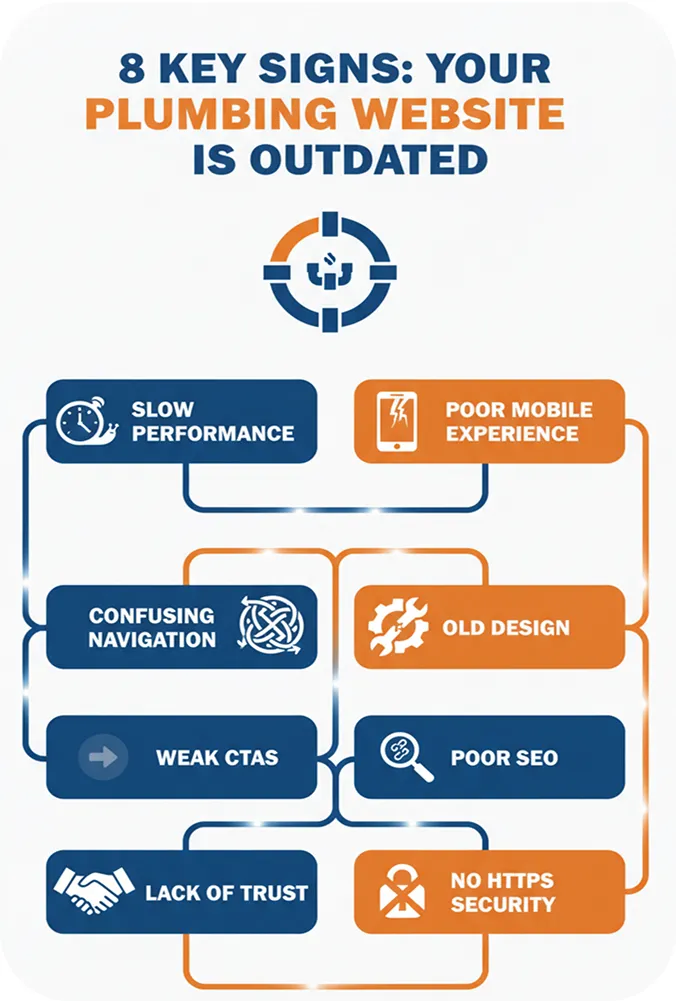
Key Signs Your Plumbing Website Is Outdated
Below are the most important indicators that your plumbing website may need an upgrade, and highlight why a professional plumbing website is important for attracting and converting customers.
Slow Website Performance
Website speed is very important because most users leave if a page takes more than a few seconds to load. This usually happens due to large images, poor hosting, outdated plugins, or heavy code, and it not only frustrates visitors but also lowers your Google rankings.
Poor Mobile Experience
Most plumbing customers search on mobile, especially during emergencies like leaks or blocked drains. If your site is not mobile-friendly—hard to read text, small buttons, or layouts that don’t adjust properly—you will lose many potential leads.
Confusing Website Navigation
If visitors cannot find information quickly, they will leave your site. This often happens when menus are too complex, services are hidden, or the structure is unclear, while a simple layout like Home, Services, Emergency Plumbing, About, and Contact makes it much easier to convert visitors into calls.
Old or Unprofessional Design
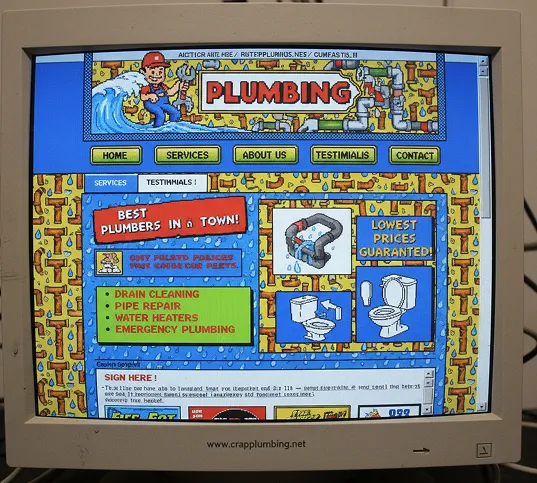
Web design trends change over time, so a website built years ago may look outdated even if it still works.
UX mistakes plumbing websites make often include cluttered layouts, old fonts, low-quality images, and too many stock photos that reduce trust and professionalism.
Weak Call-to-Actions (CTAs)
CTAs guide visitors to take action, like calling or booking a service, and without them, you lose leads.
Weak CTAs are often hidden or unclear, while strong ones like “Call Now for Emergency Plumbing” or “Get a Free Quote Today” help increase conversions.
Poor SEO Setup
SEO helps your plumbing website appear in Google when people search for services. Many outdated websites miss basic SEO like meta tags, local service pages, proper keywords, and internal linking, which reduces visibility and traffic.
Lack of Trust Elements
Customers only hire plumbers they trust, so missing trust signals can reduce conversions.
If your website has no reviews, certifications, project photos, team details, or real business information, visitors may hesitate to contact you.
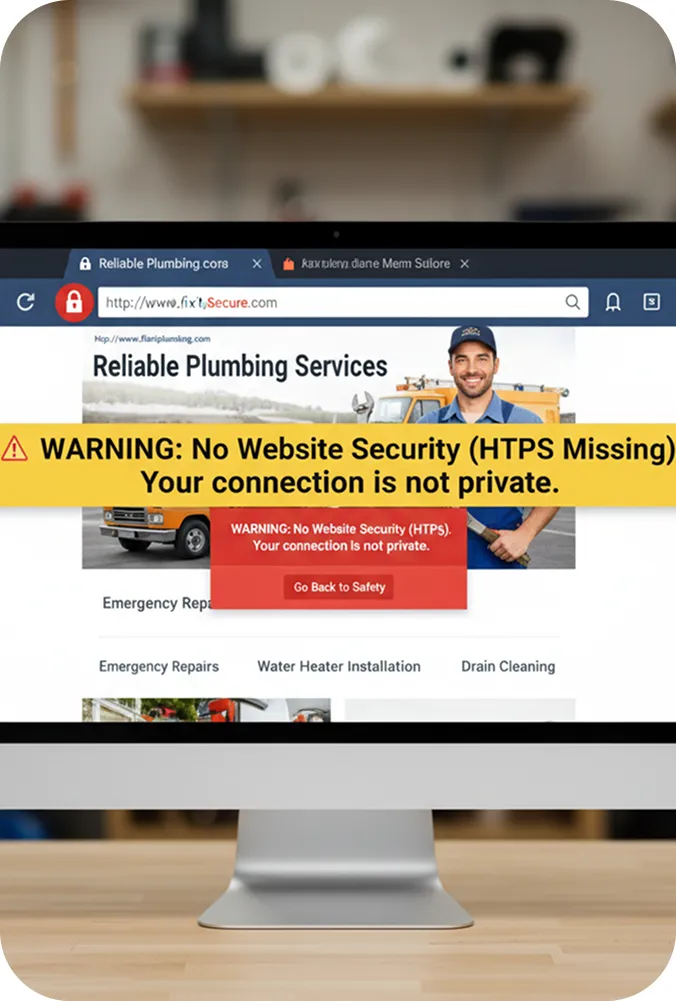
No Website Security (HTTPS Missing)
Security is a basic requirement for modern websites, and missing HTTPS can make your site look unsafe.
This often leads to browser warnings, lower rankings, reduced trust, and fewer conversions from visitors.
How an Outdated Website Hurts Your Plumbing Business
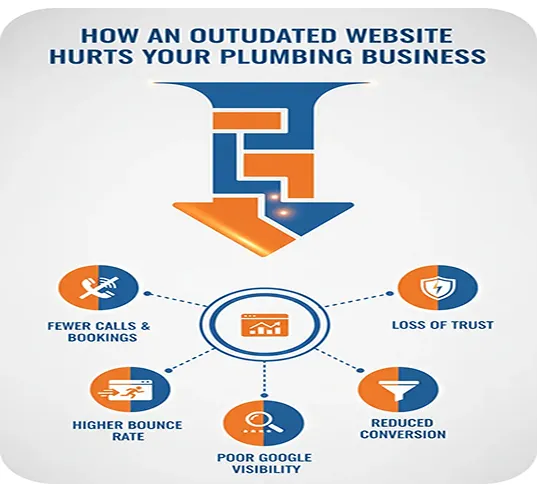
An outdated plumbing website does more damage than most business owners realize.
Here’s how it affects your business:
- Fewer phone calls and bookings
- Higher bounce rate (users leaving quickly)
- Poor Google visibility
- Loss of trust compared to competitors
- Reduced conversion rate even with traffic
Even if you run ads or SEO campaigns, an outdated website will reduce your return on investment.
In simple terms, you may be paying for traffic that never converts.
Before vs After: Outdated vs Modern Website
When comparing a plumbing website, the difference between an outdated and a modern design becomes very clear. Small changes in speed, design, and structure can directly impact how many calls and leads you get.
| Feature | Outdated Plumbing Website | Modern Plumbing Website |
|---|---|---|
| Speed | Slow loading, users leave quickly | Fast loading, smooth experience |
| Design | Old, cluttered, unprofessional look | Clean, modern, and visually clear |
| Mobile Experience | Hard to use on phones | Fully responsive and mobile-friendly |
| Navigation | Confusing menus and hidden pages | Simple and easy-to-find structure |
| Call-to-Actions | Weak or missing CTAs | Clear “Call Now” and “Get Quote” buttons |
| SEO Setup | Poor or missing optimization | Proper local SEO and keyword structure |
| Trust Signals | Few or no reviews or proof | Reviews, certifications, and real photos |
| Security | HTTP or insecure warnings | HTTPS secure website |
How to Fix an Outdated Plumbing Website
Improving your plumbing website does not always require starting from scratch. In many cases, a structured redesign can help.
Optimization can also significantly improve performance. This works best when you focus on essentials like the plumbing website must-haves before you launch.
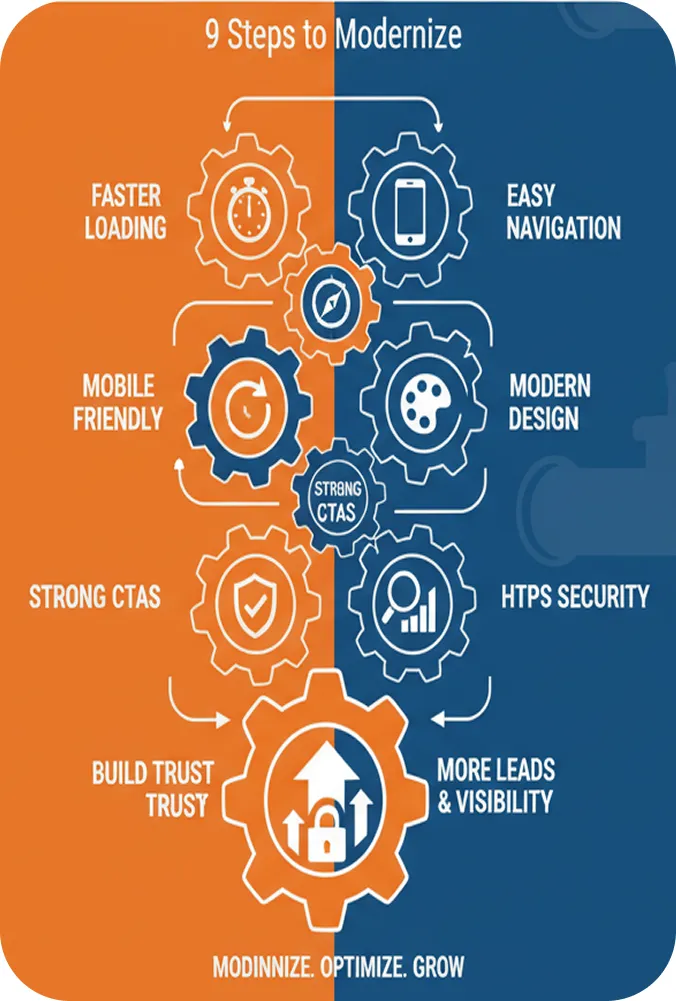
Here are key improvements:
Improve Website Speed
A slow website can make visitors leave before they even contact you.
Compressing images, using fast hosting, removing unnecessary plugins, and enabling caching can help pages load much faster and improve the overall user experience.
Upgrade Mobile Experience
Most people search for plumbers on their phones, especially during emergencies. Website maintenance services for plumbing companies can also help keep mobile performance smooth and user-friendly over time. A responsive design, simple layout, and thumb-friendly buttons make the website easier to use on smaller screens.
Improve Navigation Structure
Visitors should be able to find services quickly without confusion. Keeping menus simple and organizing services into clear categories makes the site easier to use. Adding internal links between pages also helps make your plumbing website easier to navigate and improves the overall user experience.
Modernize Design
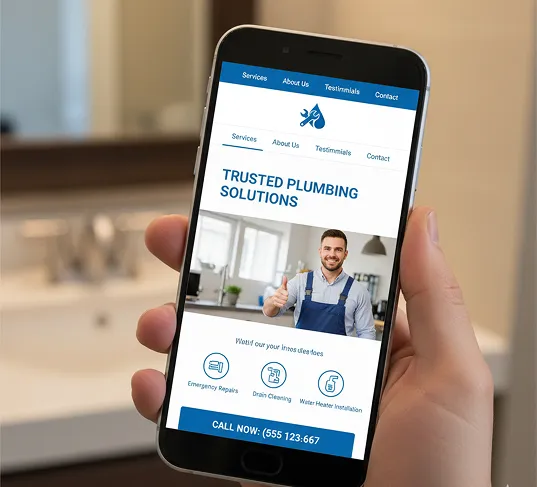
An outdated design can make the business look less trustworthy.
Using modern fonts, better spacing, cleaner layouts, and real company photos can make the website look more professional and welcoming.
Strengthen CTAs
Clear calls-to-action encourage visitors to contact the business immediately. Build a plumbing website that actually gets you calls by adding strong, visible prompts that guide users to act fast.
Adding call buttons in the header, using “Call Now” throughout the site, and including urgency-focused messages can improve conversions.
Improve SEO Structure
SEO services for a plumbing website help local customers find the website through search engines. Adding local keywords, creating dedicated service pages, and optimizing titles and meta descriptions can improve rankings and visibility.
Add Trust Elements
Trust signals help convince visitors that the business is reliable.
Customer reviews, certifications, and project photos or case studies can increase confidence and encourage more inquiries.
Enable HTTPS Security
Website security is important for both users and search engines.
Installing an SSL certificate and redirecting all pages to the secure HTTPS version helps protect visitor data and improves credibility.
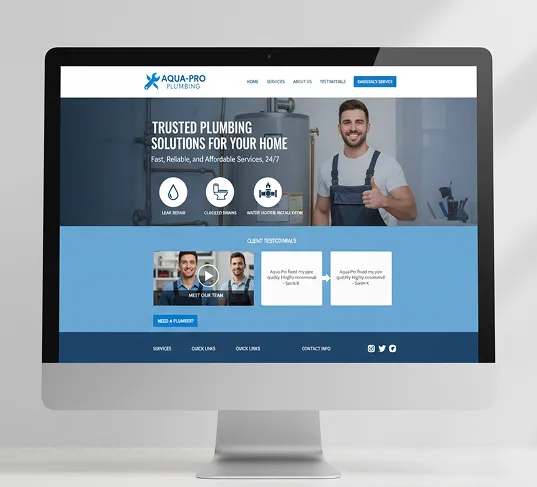
Increase Leads and Visibility
Small website improvements can have a big impact over time. A faster, modern, and user-friendly plumbing website can attract more visitors, improve search rankings, and generate more leads.
Conclusion
Your plumbing website is one of the most valuable tools for your business. If the site is outdated, slow, or difficult to use, it can reduce customer trust and cause potential leads to leave before contacting you.
A modern plumbing website should be fast, mobile-friendly, easy to navigate, and designed to convert visitors into customers. It should also support SEO, clearly display services, and build confidence through strong trust signals.
By identifying and fixing the common issues discussed in this guide, you can improve your online presence and generate more leads consistently. Even small upgrades can help your website become a stronger marketing tool that supports your business growth 24/7.