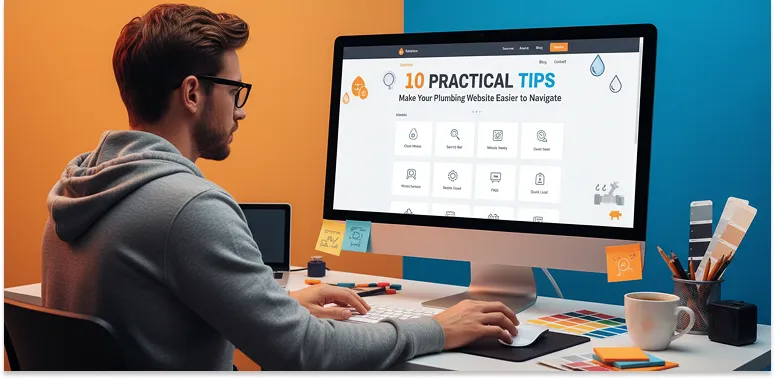
Many plumbing websites lose visitors because people cannot find what they need quickly. Confusing menus, slow pages, and messy layouts often push users away within seconds.
Most homeowners are usually in a hurry. They may be searching for emergency plumbing, drain cleaning, or leak repair. If your site is hard to use, they will simply move to another plumber.
A Good website design for a plumber makes it easier for users to find information fast and take action. This guide will help you fix common issues and make your plumbing website easier to navigate, more user-friendly, and better for both customers and search engines.
Why Website Navigation Matters for Plumbing Businesses?
Good website navigation helps visitors quickly find what they are looking for without any confusion.
Most people visiting a plumbing website are already dealing with a problem and want fast solutions. That’s why every plumber needs a professional website. They are usually searching for urgent services like:
- Emergency plumbing repair
- Drain cleaning
- Leak detection
- Water heater issues
If your website is confusing or slow to load, users will not wait. They will simply leave and choose another plumber who makes things easier.
Steps to Make Your Plumbing Website Easier to Navigate
A plumbing website should help visitors quickly find services and contact details without confusion. One of the key things plumbing website must have is a clear structure so users can move around easily.
Below are practical tips to make your plumbing website easier to navigate.
1. Keep Your Main Navigation Menu Simple and Clear
Don’t put all services on one page. It makes the website messy and hard to use.
Create separate pages for each service, like drain cleaning, leak repair, and water heater installation. This also supports better SEO services for plumbing companies by making content more focused and easier to rank.
Benefits of Separate Service Pages.
- Easier website navigation
- Better SEO performance
- Higher conversion rates
- More detailed service info
2. Make Your Contact Information Visible on Every Page
Your contact details should appear on every page. In plumbing emergencies, people want fast access to your phone number, email, or contact form without wasting time searching.
Use click-to-call phone numbers, emergency buttons, Google Maps, and clear business hours. These simple features help customers contact you quickly and improve user experience.
3. Improve Mobile Navigation for Smartphone Users
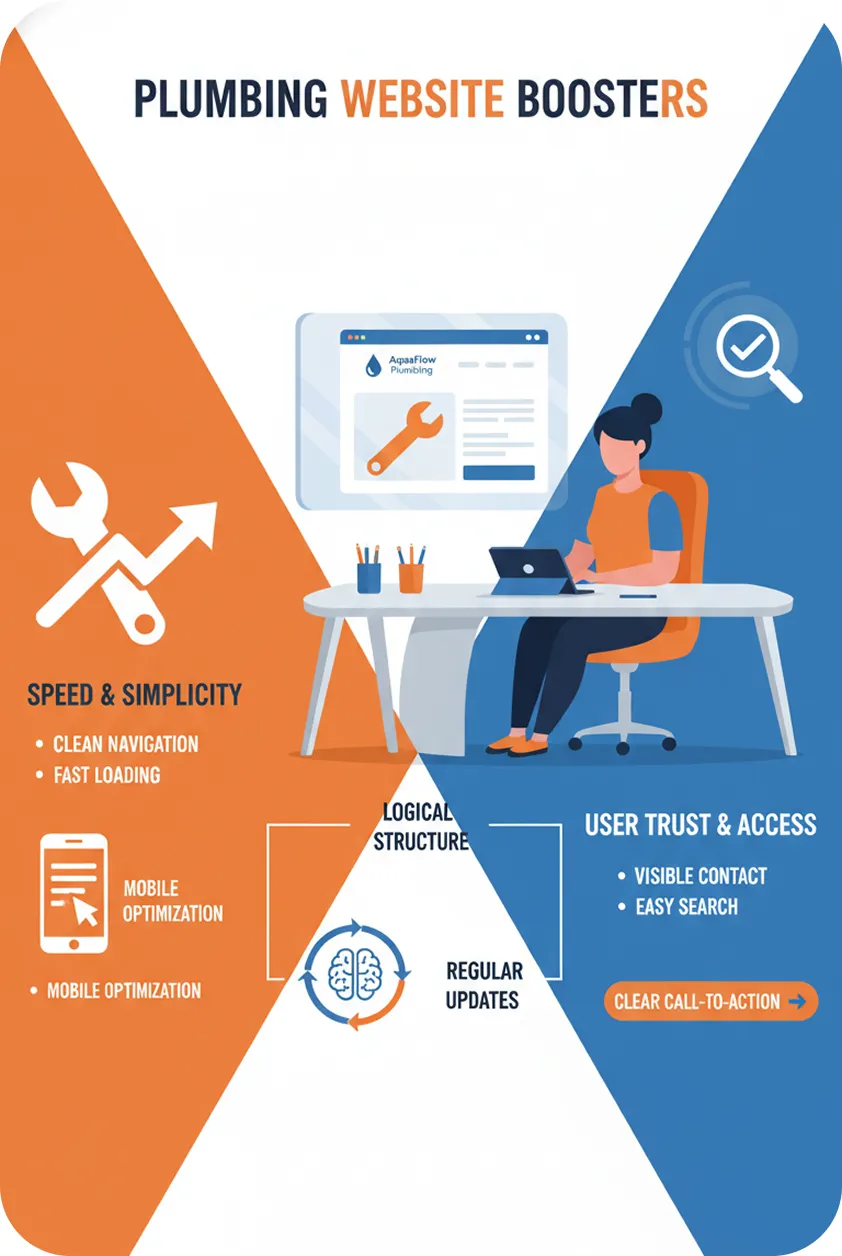
Most people search for plumbers on their phones. If your website is difficult to use on mobile, visitors may leave quickly. Keeping menus simple, buttons large, and text easy to read helps avoid common UX mistakes plumbing websites make. Good mobile navigation improves user experience and helps visitors contact you faster. It can also improve Google rankings and reduce bounce rates.
4. Add Clear Call-to-Action Buttons Across the Website
Call-to-action (CTA) buttons guide users to take action. Without them, visitors may not know what to do next, especially when you build a plumbing website that actually gets you calls.
Use simple CTAs like “Call Now,” “Book Service,” or “Request Emergency Help.” Place them on key pages like the homepage, service pages, and contact sections.
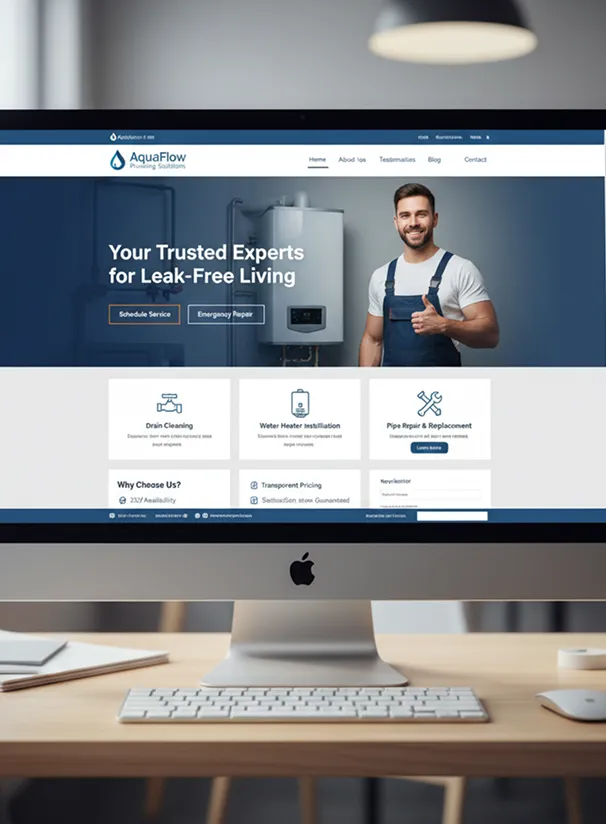
Create separate pages for each service, like drain cleaning, leak repair, and water heater installation.
Good CTA Practices
- Use short action words
- Make buttons visible
- Keep design simple
- Ensure mobile responsiveness
5. Organize Website Content With Logical Page Structure
A clear website structure helps visitors find information quickly. If pages are messy or confusing, users may leave the site. Use a simple flow like Home → Services → Contact → About → Reviews.
Link related pages together to improve navigation and SEO. Connect service pages, blogs, and important information to guide users naturally and improve search rankings.
6. Speed Up Your Plumbing Website
Slow websites frustrate users and make them leave quickly. Speed is a key part of good navigation.
Fix large images, bad hosting, and heavy scripts. A faster website creates a smoother browsing experience. Ways to improve speed:
- Enable caching
- Compress images
- Use better hosting
- Reduce scripts
7. Use Search Functionality for Better User Experience
A search bar helps users find information quickly without browsing menus.
This is especially useful for larger plumbing websites.
A simple search feature improves overall usability. Benefits of Website Search:
- Higher engagement
- Faster navigation
- Better user experience
- Easier content access
8. Build Trust With Easy-to-Find Customer Information
Show reviews, licenses, certifications, and project photos clearly on your website. Also include important pages like About Us, Reviews, and Service Guarantees to help visitors trust your business.
One of the biggest website problems small plumbing businesses face is a lack of clear trust signals, which can quickly reduce customer confidence.
Clear trust signals make customers feel more confident, helping build credibility, improve user trust, increase conversions, and encourage more calls.
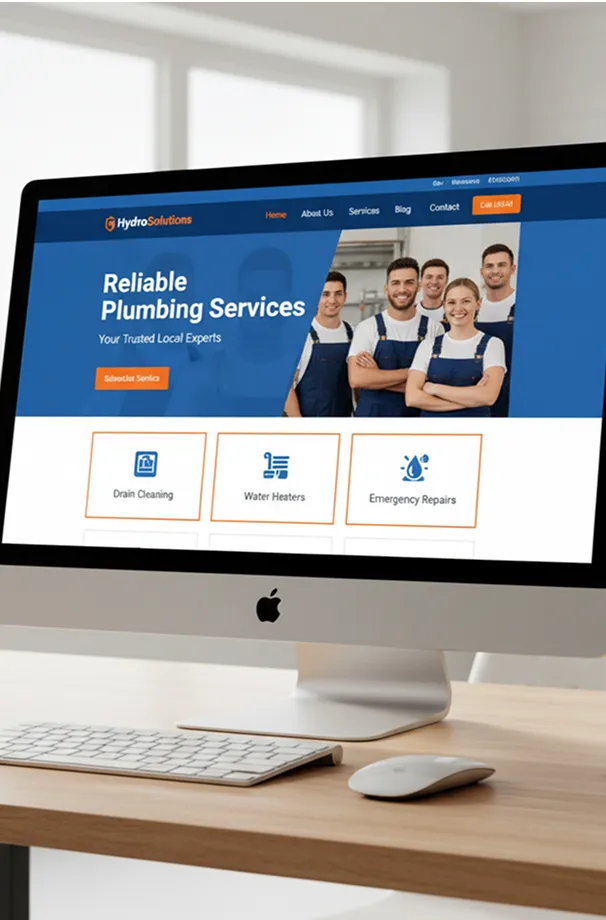
9. Regularly Test and Update Website Navigation
Regularly test your website to find issues like broken links, slow pages, or confusing layouts. Keeping your site updated helps improve user experience and keeps it easy to use. Check analytics often, fix broken links, test mobile usability, and update outdated pages. Small improvements can make a big difference.
Common Plumbing Website Navigation Mistakes to Avoid
Many plumbing websites lose potential customers because of simple navigation mistakes that make the site confusing or hard to use.
When visitors cannot quickly find services or contact details, they usually leave and look for another plumber. Some of the most common issues include:
- Overcrowded menus with too many options
- Missing or hidden contact information
- Poor mobile layout that is hard to use on phones
- Slow-loading pages that frustrate users
- No clear structure between service pages
Avoiding these mistakes helps create a smoother experience for visitors and makes it easier for them to trust your plumbing business and take action.
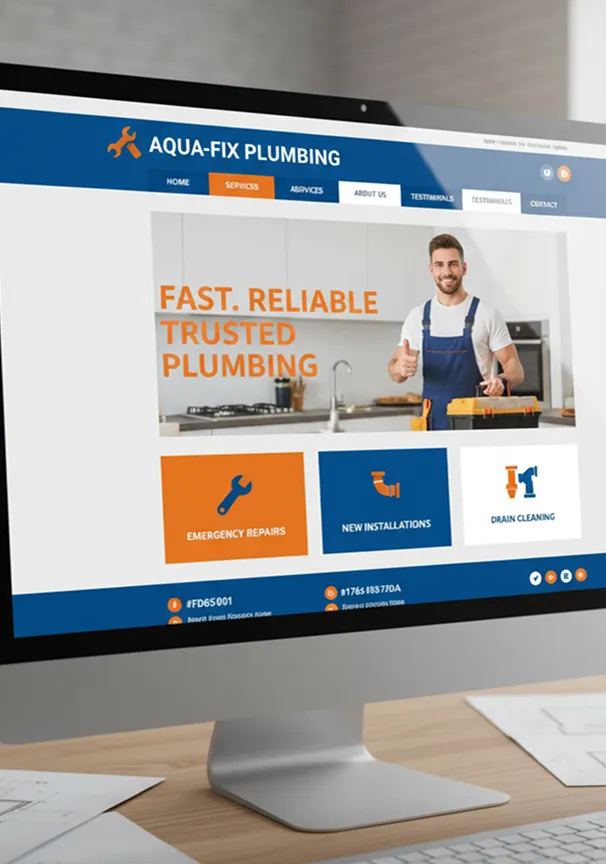
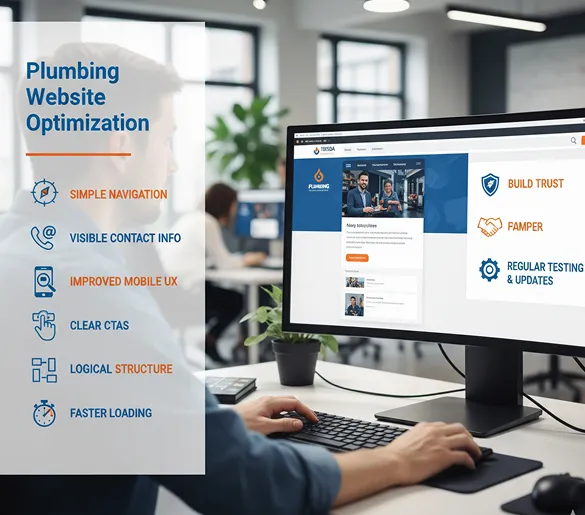
How Better Website Navigation Improves Plumbing SEO?
Good website navigation helps search engines understand your plumbing website more easily. When your pages are well organized, they are easier to crawl and index.
A clear structure also improves internal linking. This helps important pages like drain cleaning or leak repair get more visibility in search results.
Better navigation keeps visitors on your site longer. This sends positive signals to search engines and can improve your SEO rankings over time.
Conclusion
A well-structured plumbing website helps visitors find what they need quickly. People looking for plumbing services usually want fast answers, clear information, and an easy way to contact you.
Improving navigation, mobile usability, page speed, and clear call-to-action buttons creates a smoother experience for users. It also helps search engines understand and rank your website better.
Good navigation builds trust and increases leads. Even small improvements can boost conversions, improve local SEO, and support long-term growth for your plumbing business.