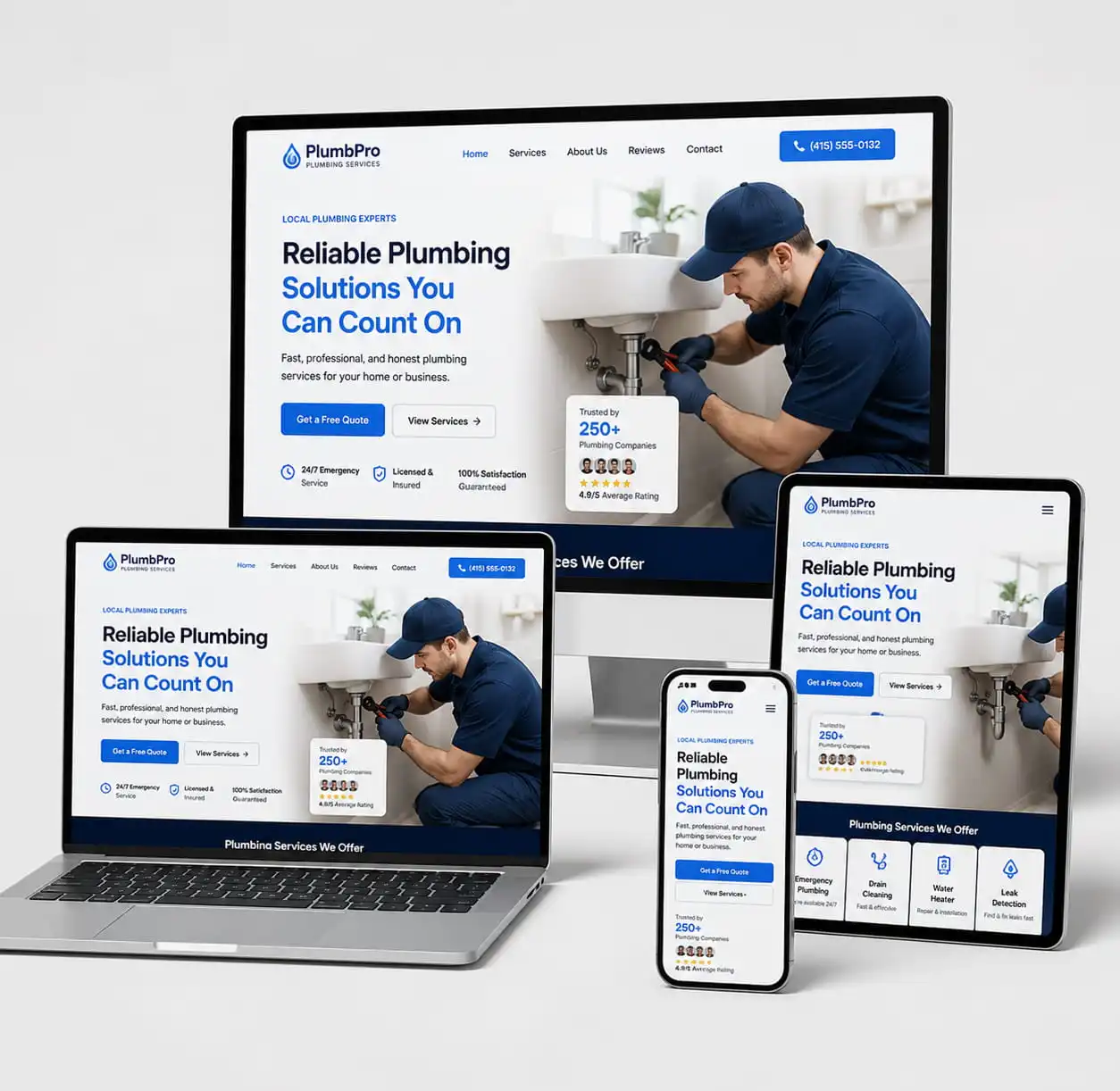
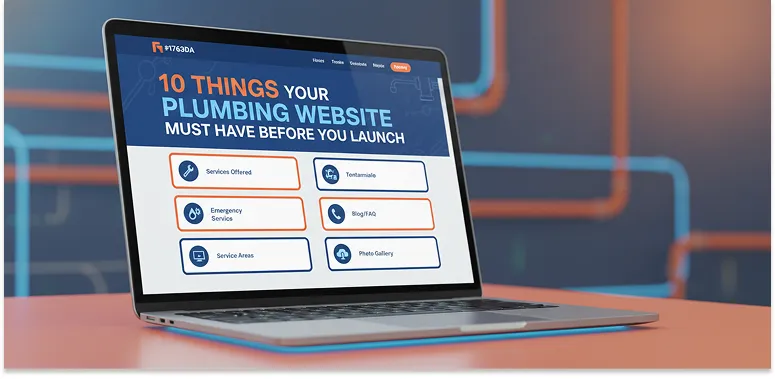
Building a plumbing website may look simple at first. But many business owners face the same problem. The website goes live, yet it does not bring calls or real customers.
Often, visitors leave without contacting. In many cases, the site also fails to appear on Google when someone searches for urgent plumbing help. This usually happens because key elements are missing before launch.
This checklist will guide you step by step. It covers everything you must have on a plumbing website before going live. The goal is to help you avoid mistakes and start with a website that brings real leads from day one.
Why Most Plumbing Websites Fail Before They Even Get Traffic?
Before launching your plumbing website, it’s important to get the basics right. Most websites fail because key elements are missing from the start. This quick checklist shows what you need for a strong, conversion-ready website.
- Clear, conversion-focused homepage
- Mobile-friendly design
- Local SEO setup
- Fast loading speed
- Dedicated service pages
- Trust signals (reviews, credentials)
- Simple contact and booking system
- Strong call-to-action (CTA) setup
- Emergency plumbing access features
- SEO-ready blog section
- Analytics and tracking setup
- SSL security and trust foundations
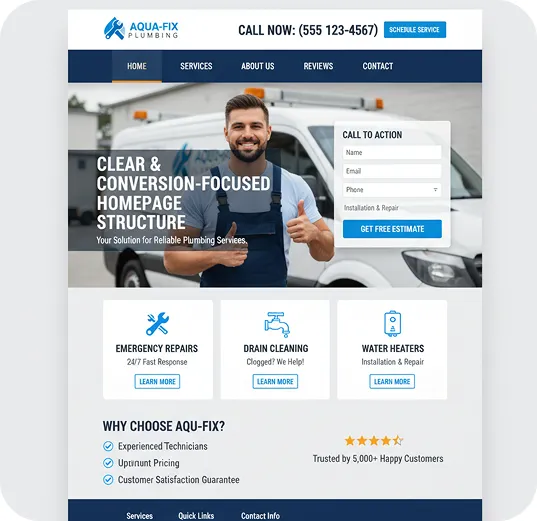
Clear and Conversion-Focused Homepage Structure
Your homepage is the first thing visitors see. It should quickly explain who you are, what you do, and how to contact you.
A strong homepage should include:
- A simple headline with your service and location
- Short intro about your plumbing services
- Phone number clearly visible at the top
- Quick list of services (repairs, emergency, installations, etc.)
- Clear buttons like “Call Now” or “Get a Free Quote.”
Keep it clean and simple. Avoid too much text or clutter. The goal is to guide visitors to contact you as quickly as possible.
A well-structured homepage helps you get more calls and improves conversions.
Mobile-Optimised Design for On-the-Go Customers
Most people search for plumbers on their phones, especially in emergencies.
If your site doesn’t work well on mobile, you will lose many potential customers.
A mobile-friendly website should have:
- Responsive website design for plumbers for all screen sizes
- Click-to-call button for instant contact
- Clear, readable text without zooming
- Simple and fast navigation menus
- Easy-to-fill contact forms
A mobile-optimised site helps customers reach you quickly when they need urgent help, like leaks or burst pipes.
Strong Local SEO Optimisation Setup
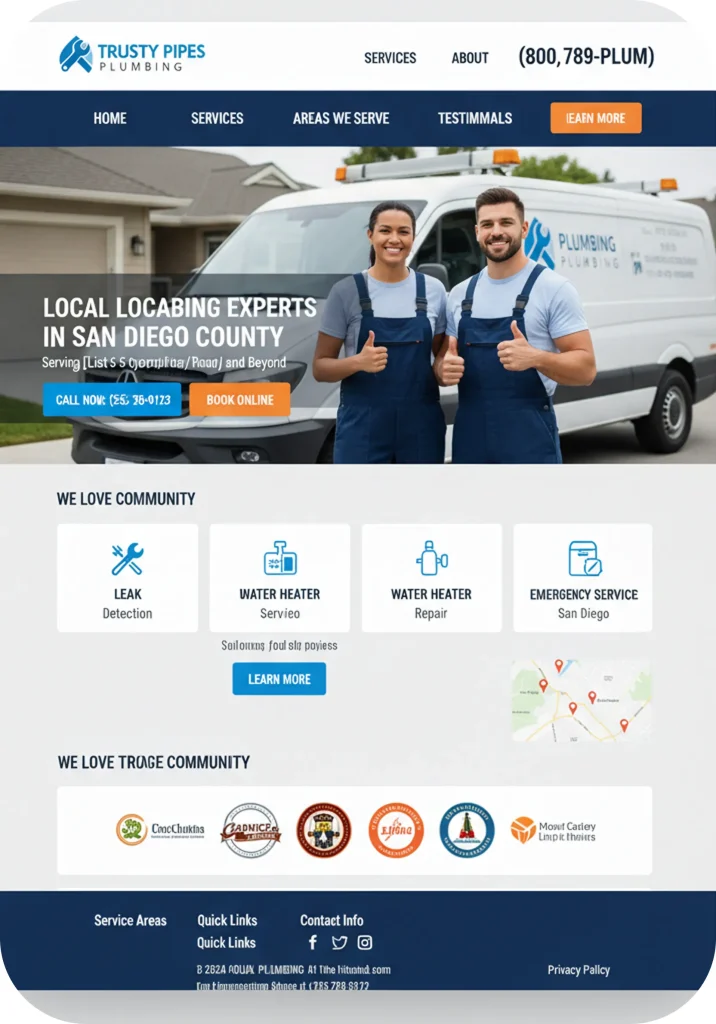
Local SEO services for plumbing businesses help appear in searches like “plumber near me” and attract nearby customers searching for urgent services.
This includes optimising your Google Business Profile, using location-based keywords, keeping contact details consistent, and creating service area pages where needed.
Fast Loading Speed and Technical Performance
Website speed has a direct impact on user experience and conversions. If a plumbing website loads slowly, many visitors may leave before contacting the business.
Using compressed images, reliable hosting, lightweight code, and caching tools can significantly improve website performance. Faster websites also tend to perform better in search engine rankings.
Clear Service Pages That Explain Everything
Each plumbing service should have its own dedicated page to improve SEO and help customers quickly understand what you offer.
These pages should clearly explain the service, common plumbing problems, the repair process, pricing details when possible, and related FAQs for a better user experience.
Trust Signals That Build Instant Credibility
Customers are more likely to contact a plumber when the website looks trustworthy and professional.
Adding customer reviews, certifications, years of experience, project photos, and service guarantees helps build confidence and increase conversions.
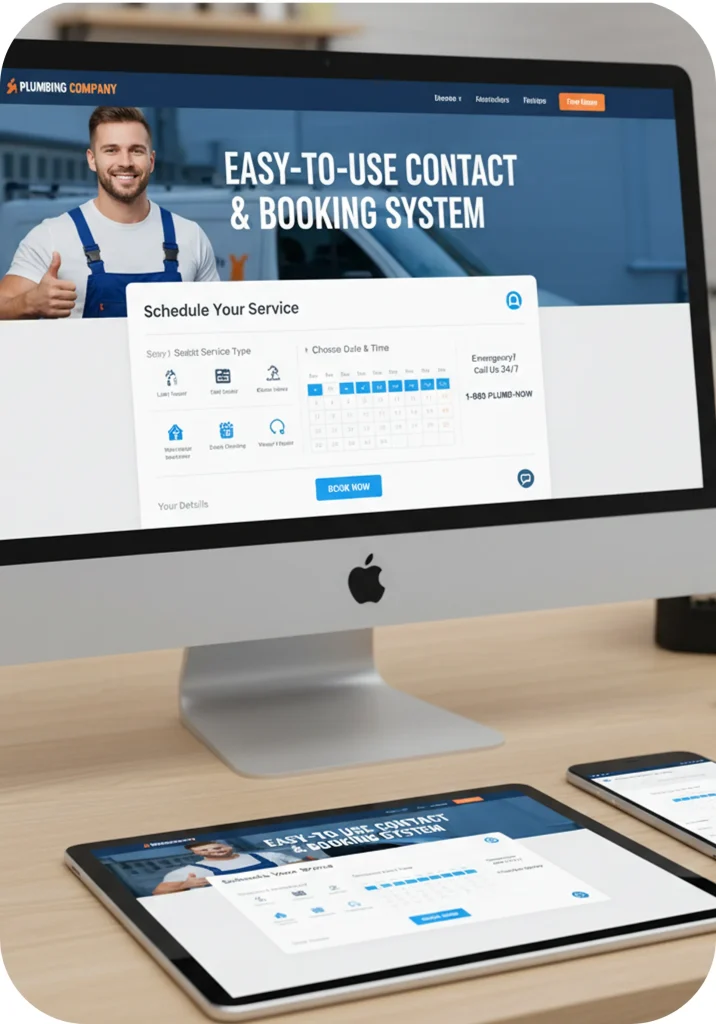
Easy-to-Use Contact and Booking System
A plumbing website should make it simple for customers to contact your business without confusion or delays.
Features like click-to-call buttons, short contact forms, WhatsApp chat, and online booking options help improve lead generation and customer response rates.
High-Converting Call-to-Action (CTA) Strategy
Strong call-to-action buttons help guide visitors toward contacting your plumbing business instead of leaving the website. CTAs like “Call Now,” “Book an Appointment,” or “Request Emergency Service” should appear across important sections of the website, including the homepage, service pages, and footer.
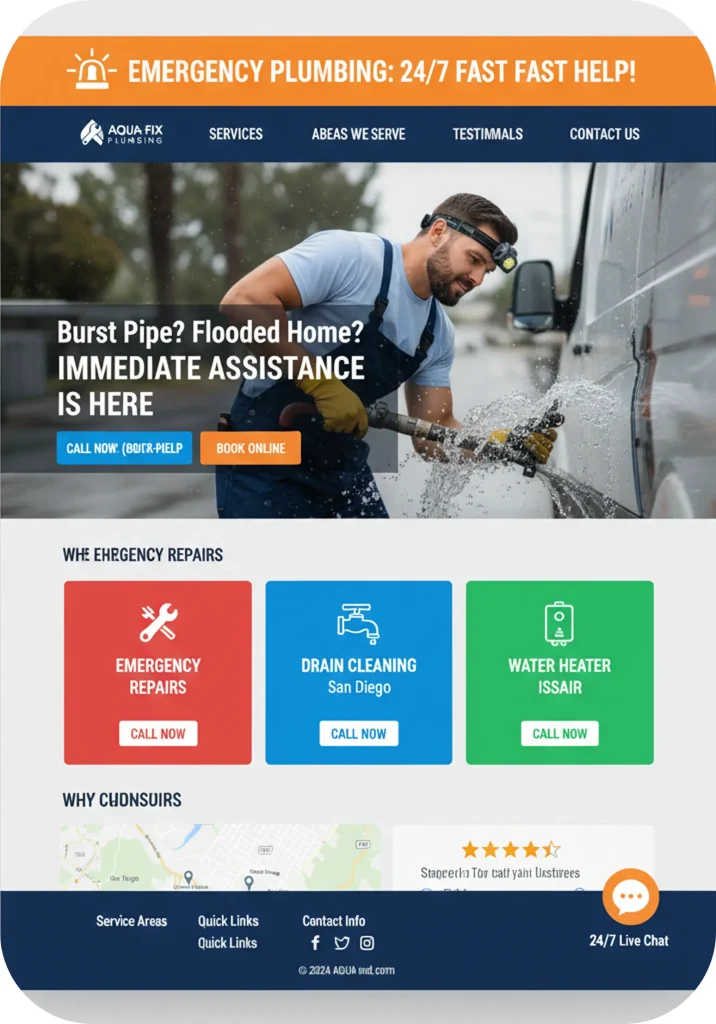
Emergency Plumbing Visibility and Fast Access Features
People searching for emergency plumbing services need quick and easy access to help during urgent situations.
Your website should clearly display emergency services, a visible phone number, fast mobile contact buttons, and clear response-time information to improve conversions.
SEO-Ready Blog Section for Long-Term Traffic Growth
A plumbing blog helps your website rank for more search terms and attract long-term organic traffic from Google.
Publishing helpful content like plumbing tips, maintenance guides, repair advice, and cost-related articles helps build authority and answer real customer questions naturally.
Analytics and Tracking Setup Before Launch
Before launching a plumbing website, it’s important to set up tracking tools to understand how users interact with your site.
Key tools include Google Analytics for traffic insights, Google Search Console for SEO performance, and conversion tracking for calls and form submissions. These help you measure what’s working and improve results over time.
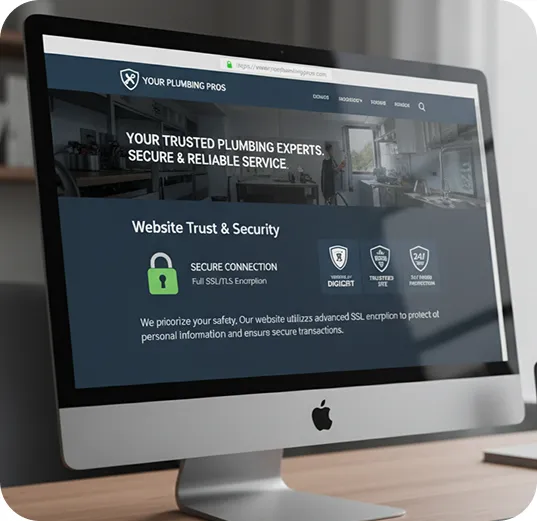
Security, SSL, and Website Trust Foundations
Security is critical for any professional website. Visitors need to feel safe when submitting their information.
Key security elements:
- SSL certificate (HTTPS enabled)
- Secure hosting environment
- Spam protection on forms
- Regular updates and backups
A secure website not only protects data but also improves search engine trust.
Final Pre-Launch Checklist for Plumbing Websites
Missing even one of these can reduce your website’s effectiveness. Before launching, ensure you have:
- Fully optimised homepage
- Mobile-friendly design
- Local SEO setup completed
- Fast loading speed tested
- Dedicated service pages created
- Trust elements added
- Contact and booking system working
- Strong CTA placements
- Emergency plumbing section visible
- Blog structure ready
- Analytics installed
- Security measures active
Final Verdict
A plumbing website is not just a digital brochure—it is a lead generation system. If built correctly, it can bring consistent calls, bookings, and long-term business growth.
The key is preparation before launch. When all essential elements are in place—from SEO and speed to trust and usability—your website becomes a powerful business asset rather than just an online placeholder.
By implementing these 10 must-have elements, you ensure that your plumbing website is not only ready for launch but also ready to compete, rank, and convert from day one.