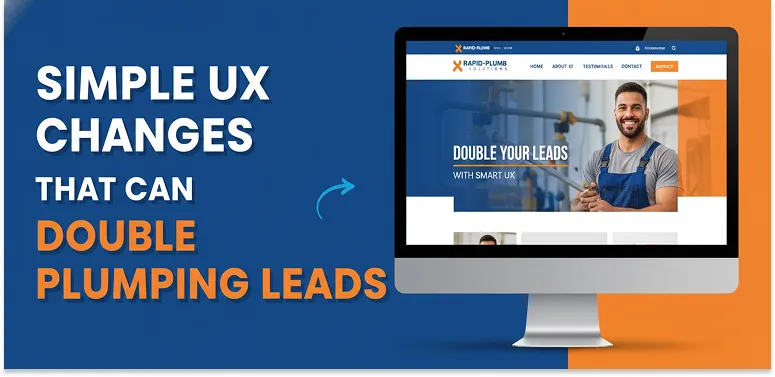
Most plumbing websites don’t fail because of traffic. They fail because visitors don’t take action.
Someone lands on the site, looks for a phone number, checks if the service feels trustworthy, and leaves within seconds if anything feels unclear or slow.
That’s where UX (User Experience) changes everything. Good UX doesn’t “decorate” a website. It removes confusion, speeds up decisions, and makes it extremely easy to call or book a plumber—especially in a website design for plumbers setup.
This guide breaks down simple UX changes in a clear, step-by-step structure so you can actually follow and apply them.
Understanding Plumbing User Behaviour
Before changing anything on the website, you first need to understand how plumbing customers behave online.
Most users searching for plumbing services fall into three categories:
- Emergency users – They need immediate help (burst pipe, leak, blockage).
- Problem solvers – They compare services before booking (water heater issues, slow drains).
- Planners – They look for installation or maintenance services.
All plumbing users want fast answers and quick action. They need an easy-to-find phone number, clear services, trust signals, a mobile-friendly layout, and no confusion. If they don’t get this within seconds, they leave.
Above-the-Fold Optimisation (First Impression UX)
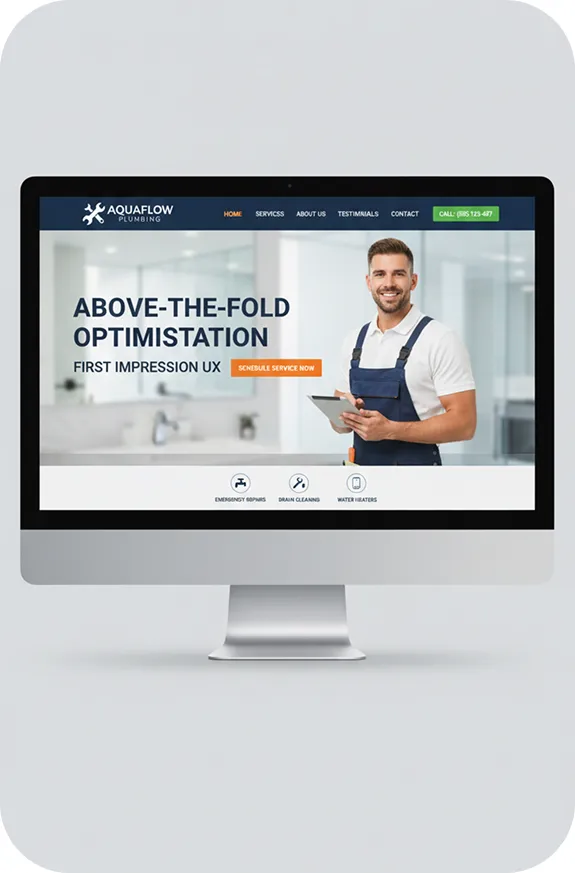
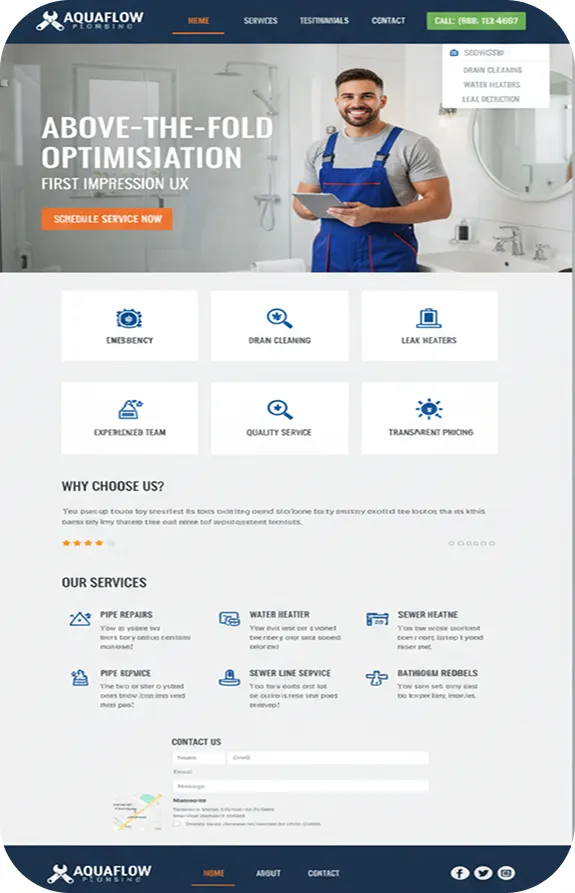
The “above the fold” section is the first screen users see before scrolling. For plumbing websites, this area is critical because it decides whether a visitor stays or leaves.
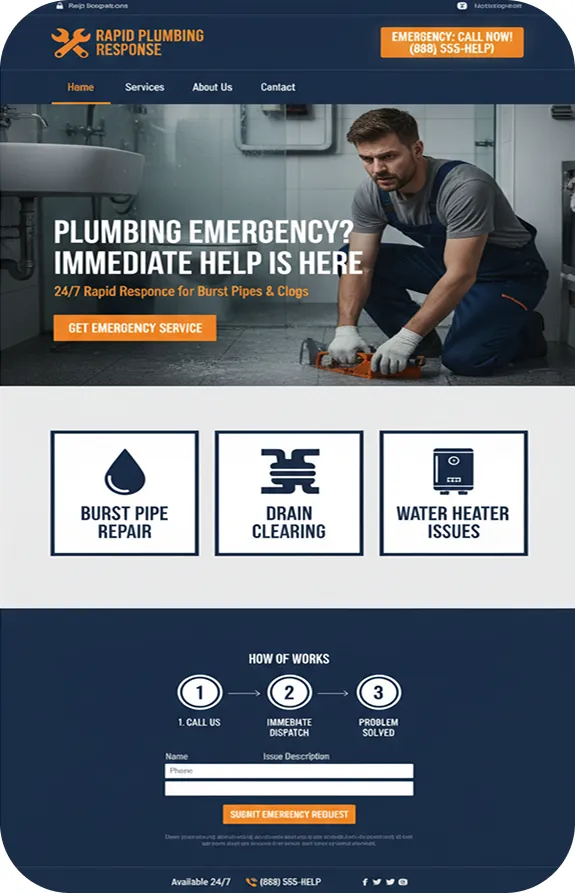
A high-converting above-the-fold section should include:
- A clear headline (what you do + where you serve)
- A short supporting line (speed, availability, trust)
- A visible phone number (click-to-call)
- A strong CTA button (e.g., “Book a Plumber Now”)
- Emergency service mention (if available)
Avoid long paragraphs, generic stock images, multiple competing buttons, and hidden contact details. Keep it simple and focused.
A strong example is: “Fast & Reliable Plumbing Services in Your Area – Available 24/7” because it clearly shows value and urgency in seconds.
Navigation and Site Structure
Poor navigation is one of the biggest reasons plumbing websites lose leads, and it’s important to make your plumbing website easier to navigate from the very beginning.
Users should be able to find any service within 1–2 clicks. A clean structure looks like this:
- Home
- Services
- Emergency Plumbing
- Drain Cleaning
- Leak Detection
- Water Heater Repair
- About
- Reviews
- Contact
Keep menus simple, avoid deep dropdowns, highlight “Call Now” in the header, and use sticky navigation for mobile.
Users in urgent situations don’t explore—they just scan and act fast.
Mobile UX Optimisation
More than half of plumbing traffic comes from mobile devices. If your mobile UX is poor, your leads drop immediately.
Key mobile UX improvements:
- Large clickable phone button at the top
- Sticky “Call Now” bar
- Short, scroll-friendly sections
- Fast-loading images
- Easy-to-fill forms
Avoid tiny text, hard-to-click buttons, intrusive pop-ups, and slow sliders. Mobile UX should feel simple and direct, leading users straight to contact instead of making them browse.
Page Speed and Technical UX
Website speed directly affects user experience and conversions. If a plumbing website takes more than 3 seconds to load, many visitors leave before exploring the page.
Improving speed often involves compressing images, enabling caching, removing unnecessary plugins, and using lightweight themes. Lazy loading images can also help improve performance.
Even a small improvement in load time can make a noticeable difference. Faster websites often generate more leads, especially for users searching for urgent plumbing services.

High-Converting Service Page Design
Service pages play a major role in generating leads. Each page should focus on one specific service or customer problem instead of covering multiple services at once.
A strong service page includes a clear title, a problem-focused introduction, a simple solution explanation, key benefits, testimonials, and clear call-to-action sections. Pricing details or transparency cues can also improve trust.
If your website design is outdated, it often shows in weak service page structure and poor conversions. Avoid vague pages like “We offer all plumbing services.” Use clear, search-focused pages such as “Emergency Leak Repair in 30–60 Minutes” to better match user intent and improve conversions.
Trust-Building Elements
Trust is one of the biggest conversion drivers in plumbing UX.
Without trust, users won’t call—even if they need help.
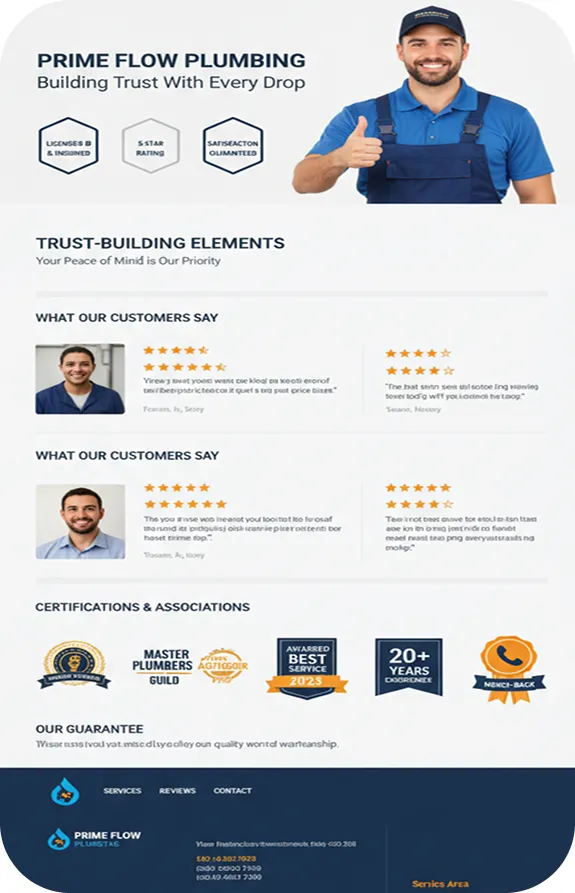
Key trust elements:
- Customer reviews and ratings
- Before/after images (where applicable)
- Certifications and licenses
- Years of experience
- Local service proof
- Real team photos (not stock images)
Place trust elements near CTAs, repeat reviews on service pages, and show trust badges in the header and footer.
This builds confidence and reduces hesitation, especially for emergency or high-value jobs.
Call-to-Action (CTA) Optimisation
CTAs are one of the most important parts of website UX because they guide users toward taking action. Weak or unclear CTAs can reduce conversions, even with strong traffic, when you build a plumbing website that actually gets you calls.
Effective CTAs use clear action-focused language like “Call Now for Immediate Help” or “Book Your Plumber Today.” They should stand out visually, appear throughout the page, and include urgency when relevant.
Avoid vague buttons like “Submit,” too many competing actions, or hard-to-find contact options. On plumbing websites, simple and direct CTAs usually perform better than creative wording.
Forms and Contact Optimisation
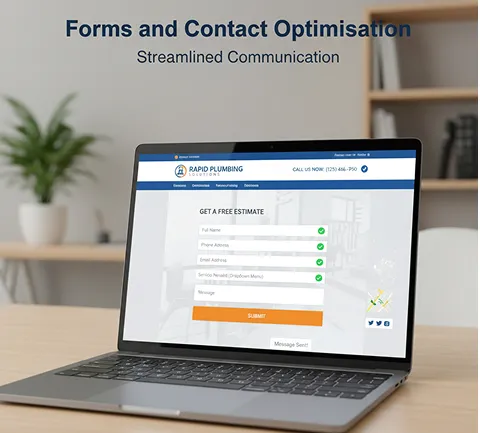
If users prefer forms over calling, your form UX must be frictionless. Best practices:
- Keep forms short (name, phone, issue)
- Use dropdowns for service type
- Add auto-fill support
- Include “urgent request” option
- Show the confirmation message clearly
Avoid long multi-step forms, unnecessary questions, and hidden form pages.
Always keep it simple and offer both options: calling as the main choice and a form as the backup.
Local SEO + UX Alignment
UX and local SEO work together on plumbing websites. If users search “plumber near me,” your website must clearly signal local relevance to keep them engaged.
Key UX + SEO alignment includes mentioning service areas, using location-based headings, adding a Google Maps embed, showing local testimonials, and keeping consistent NAP (Name, Address, Phone). Good seo services for plumbers also focus on aligning these elements to improve both visibility and conversions.
This combination builds trust and makes it easier for users to choose your service, increasing the chances of turning visits into real leads.
Visual Hierarchy and Readability
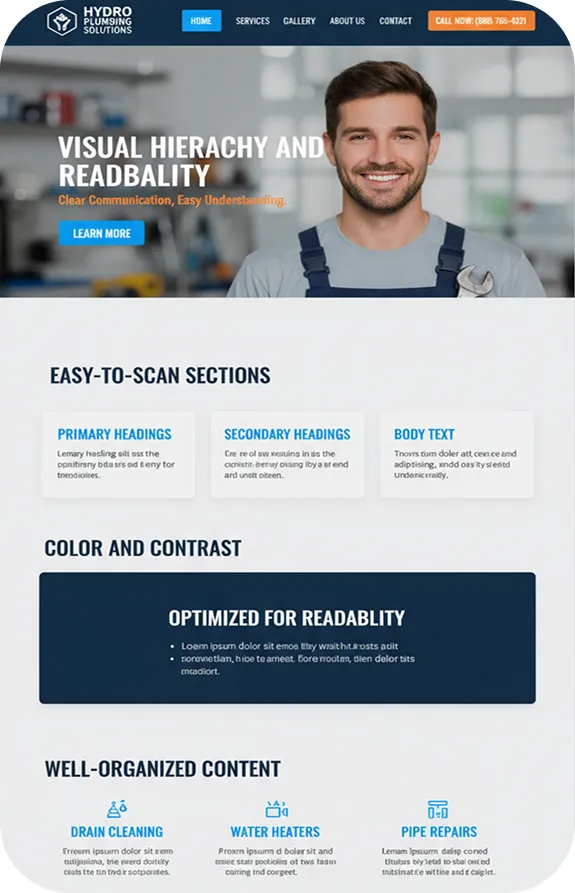
Good UX depends on how easily users can scan and understand content. Use short paragraphs, clear headings, and highlighted keywords to make information quick to absorb.
Add bullet points, spacing, and a clean layout to improve flow. Guide users from problem to solution, then trust, and finally action, without clutter, especially when addressing common problems small plumbing businesses face.
Emergency UX Design
Emergency users need instant access, so the design should focus on speed and clarity. Features like a 24/7 emergency banner and sticky call buttons are essential.
Keep pages minimal with fast loading and direct contact options. Remove distractions so users can act immediately without delay.
Common UX Mistakes That Reduce Leads
In many plumbing websites, the problem is not traffic but how the website experience is designed. Small UX flaws can quietly stop users from taking action, especially when they are in a hurry or looking for urgent help. Many plumbing websites lose leads due to simple mistakes:
- Hidden phone numbers
- Slow-loading pages
- Confusing navigation
- Weak CTAs
- No mobile optimization
- Generic service pages
- Lack of trust signals
- Overdesigned visuals that slow users down
Even fixing just 3–4 of these issues can noticeably increase lead volume.
Final UX Checklist for Doubling Plumbing Leads
Before you finish or update your plumbing website, it’s important to quickly review whether everything is optimized for fast action and easy contact.
Before launching or updating your site, ensure:
- Phone number is visible on every page
- Mobile “Call Now” button is active
- Pages load in under 3 seconds
- Service pages are specific and focused
- CTAs are repeated and clear
- Forms are short and simple
- Trust signals are visible
- Navigation is simple and clean
- Emergency access is prioritized
- Local SEO elements are included
This checklist alone can significantly improve conversion rates.
Final Verdict
Doubling plumbing leads is not about redesigning everything—it’s about removing friction. Users don’t want complexity; they want quick solutions and instant trust.
By improving UX in small but strategic ways—faster access, clearer messaging, better mobile design, and stronger CTAs—you create a website that works like a 24/7 lead generation system.
In the plumbing industry, where urgency is high and competition is strong, good UX is not optional—it is the difference between a missed call and a booked job.