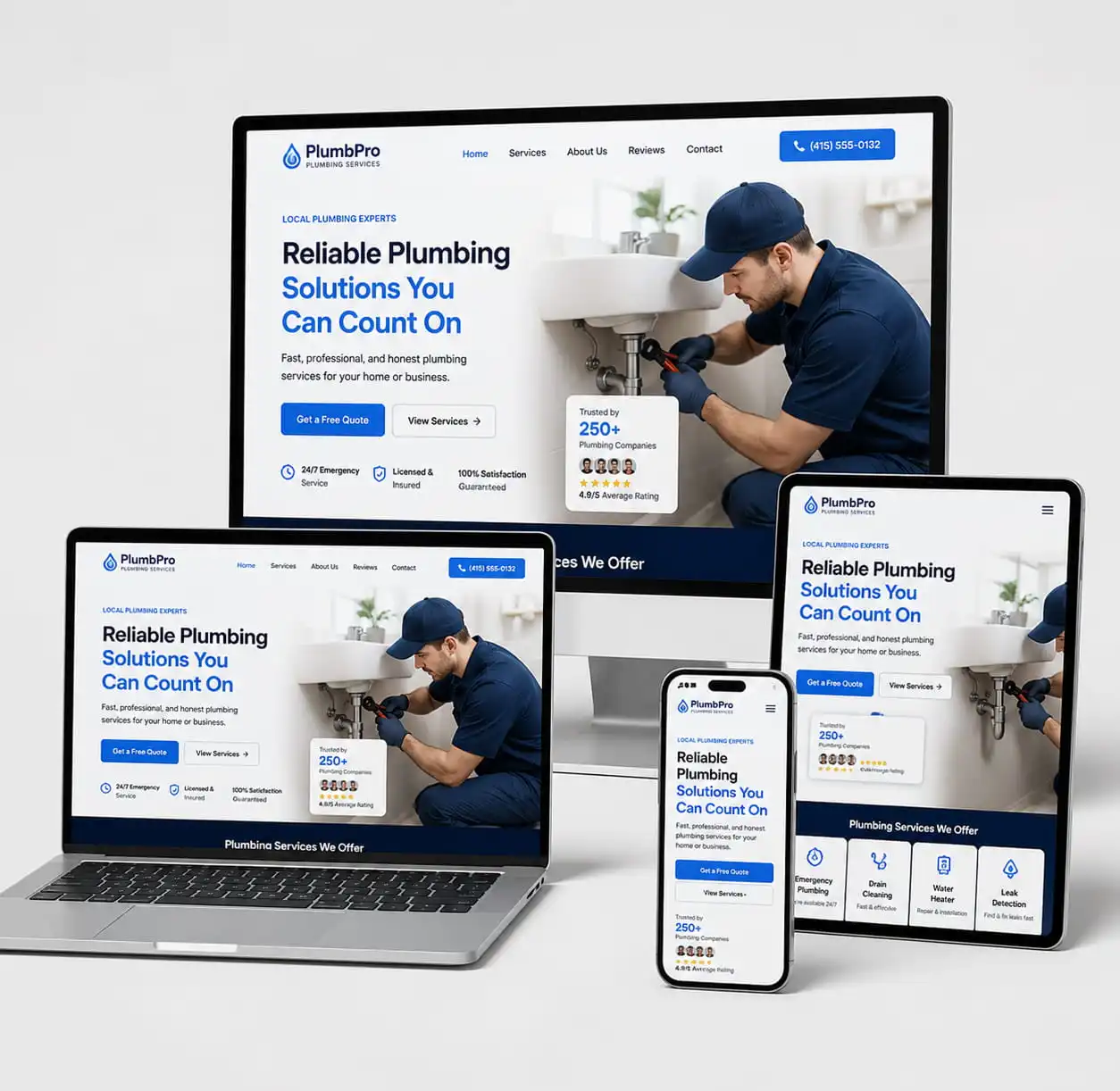
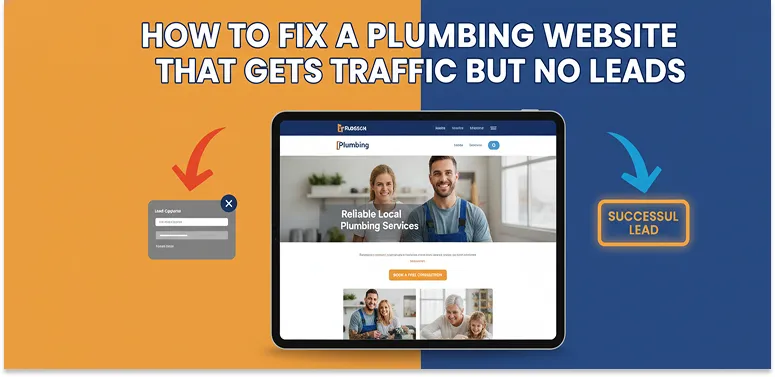
Getting website traffic but no leads is a common challenge for plumbing businesses. Your site may be attracting visitors, ranking on Google, and generating clicks — but if no one is calling or filling out forms, something is not working.
This usually means the problem is not visibility, but conversion, often linked to weak structure or poor website design for plumbers that fails to guide users toward action. In simple terms, your website is attracting visitors but not convincing them to take action.
In this guide, we will break down exactly why this happens and how to fix it using practical, real-world strategies focused on plumbing lead generation, conversion rate optimization (CRO), UX improvements, and local SEO alignment.
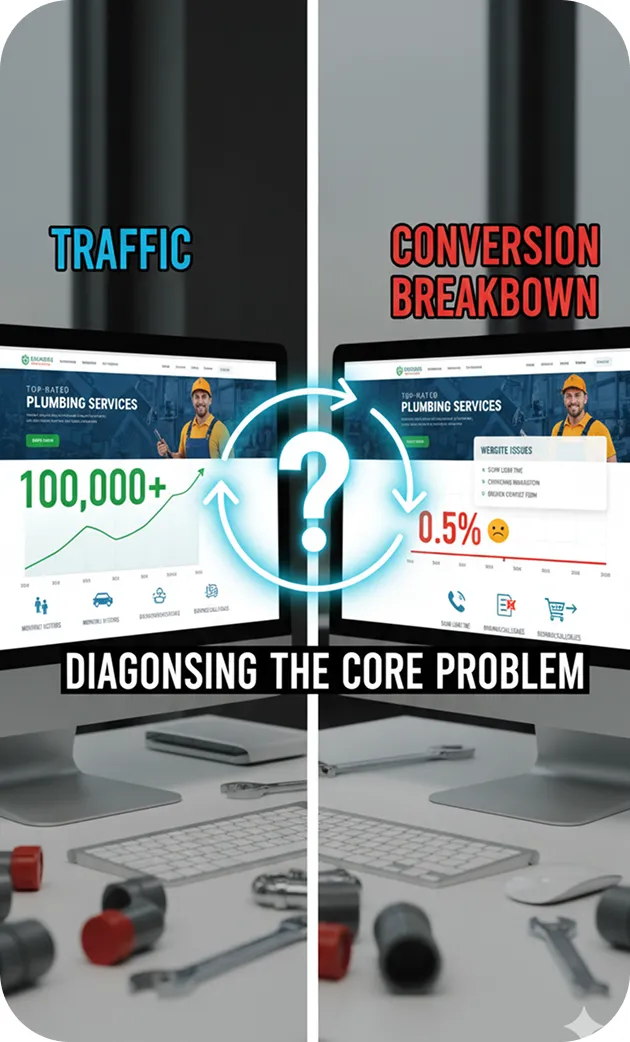
Diagnosing the Core Problem (Traffic vs Conversion Breakdown)
Before making changes, you need to understand where the breakdown is happening.
A plumbing website typically fails in one of two areas:
- Traffic problem: Not enough people are visiting your site
- Conversion problem: Visitors come, but don’t contact you
If you already have traffic, then your focus should shift entirely to conversion optimization.
Ask yourself:
- Are users leaving within a few seconds?
- Are they visiting service pages but not contacting you?
- Are mobile users dropping off at a higher rate than desktop users?
If the answer is yes, your issue is not marketing—it’s messaging, structure, and trust.
1. User Intent Mismatch
One of the most common reasons plumbing websites fail to convert is user intent mismatch. A visitor searching for “emergency plumber near me” expects fast answers, immediate contact options, and urgent service information — not a general overview of plumbing services.
To improve conversions, align each page with a specific search intent, such as emergency repairs, installations, or pricing. Use clear, direct messaging, remove distractions, and make users feel they found exactly what they were looking for.
Website UX Problems That Kill Plumbing Leads
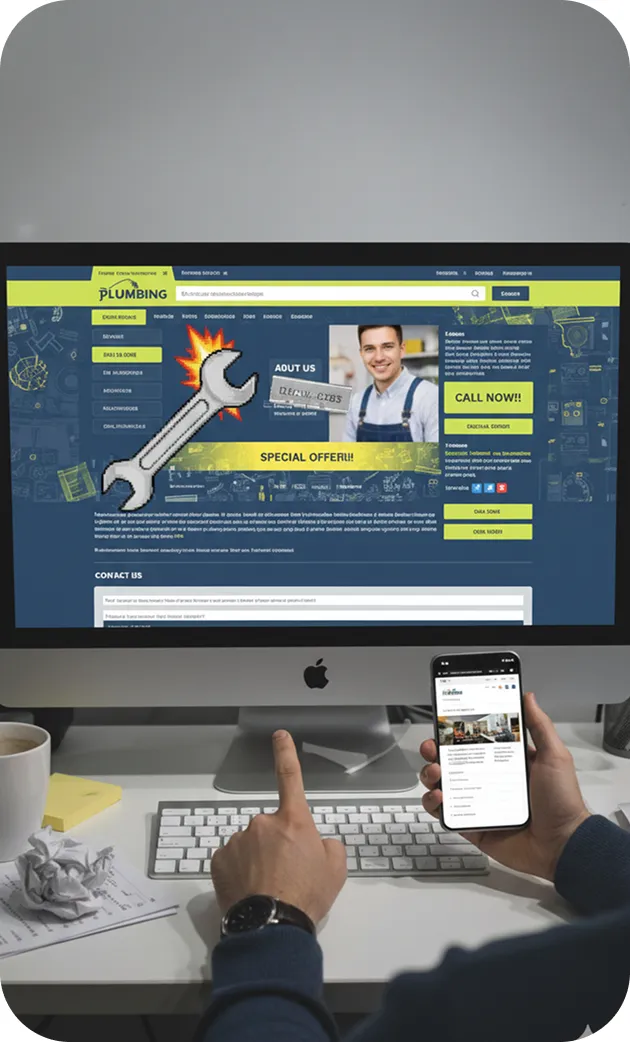
User experience (UX) has a major impact on plumbing lead generation. Issues like slow loading speeds, confusing navigation, poor mobile layouts, and hidden contact details can quickly drive visitors away before they take action.
A plumbing website should feel fast, simple, and easy to navigate. Keep the design clean, place contact information in visible areas, and make service pages easy to scan with clear sections and short paragraphs.
Weak or Missing Call-to-Actions (CTAs)
Many plumbing websites lose leads because they do not clearly guide visitors toward the next step. Generic CTAs like “Learn More” or “Submit” often fail to create urgency or encourage action.
Use strong, action-focused CTAs such as “Call Now for Emergency Plumbing Help” or “Get a Free Quote Today.” Make sure CTAs appear above the fold, repeat throughout the page, and reflect the urgency customers expect from plumbing services.
Poor Service Page Optimization
Service pages are often the main conversion drivers on a plumbing website, yet many are too basic to generate leads effectively. Simply listing services in a few lines is rarely enough to build trust, answer customer concerns, or support strong search visibility.
A high-converting service page should clearly explain the service, highlight common customer problems, outline the solution, include pricing guidance or FAQs, and feature strong CTAs throughout the page. Each service page should function like a sales-focused landing page, not just a simple information page.
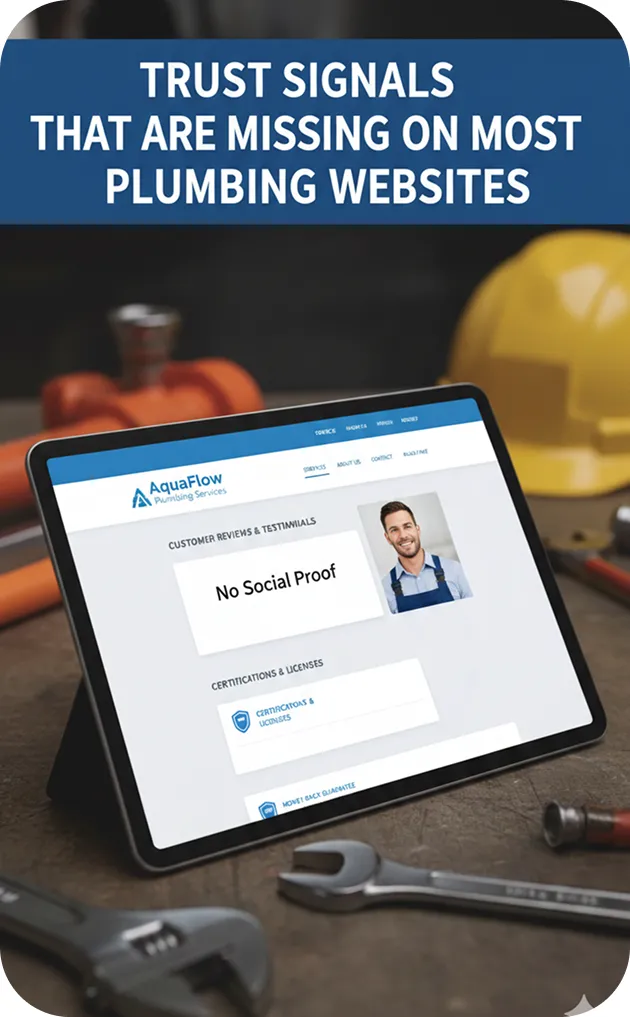
Trust Signals That Are Missing on Most Plumbing Websites
Plumbing is a trust-driven service because customers are letting someone into their home in urgent situations. If your website does not quickly build confidence, users will leave, even if your traffic is strong, which is why it’s important to build a plumbing website that actually gets you calls through strong trust elements.
Strong trust signals include reviews, certifications, before-and-after photos, guarantees, local service proof, and real team images instead of stock photos. Without these elements, even well-ranked websites struggle to convert visitors into leads.
Local SEO Gaps That Reduce Lead Quality
Sometimes the issue is not just traffic volume but traffic quality. Weak local SEO often brings in visitors who are not in your actual service area or not ready to hire.
To fix this, create location-specific pages, use natural keywords like “plumber in [city],” keep your business details consistent (NAP), and fully optimize your Google Business Profile with services, photos, and updates. Strong local SEO for plumbing websites brings higher-intent visitors who are far more likely to convert.
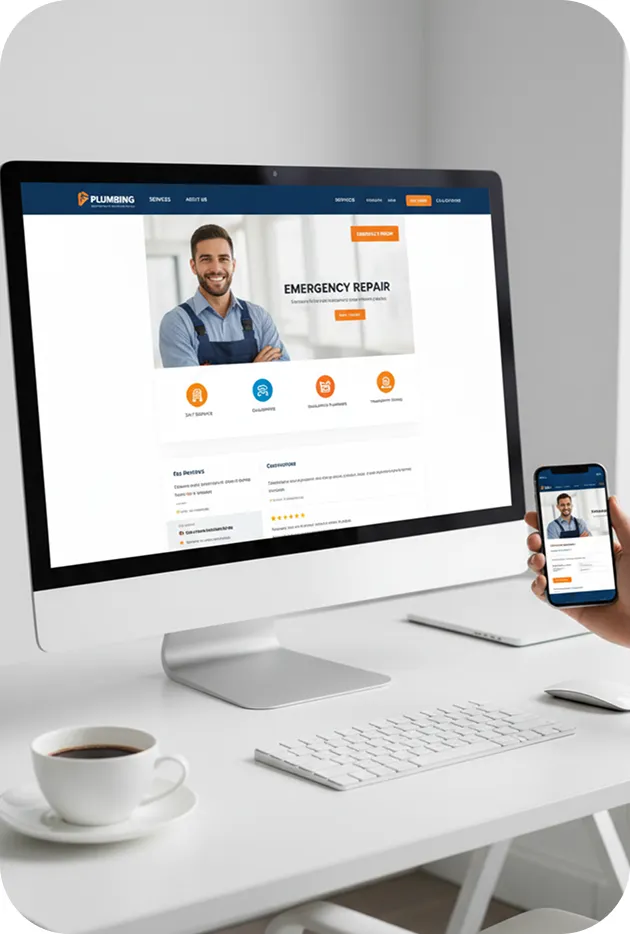
Conversion Rate Optimization (CRO) Fixes for Plumbing Websites
Conversion Rate Optimization (CRO) helps turn website visitors into actual leads.
For plumbing businesses, the goal is simple: make it as easy and fast as possible for users to call or book a service.
High-impact CRO improvements include:
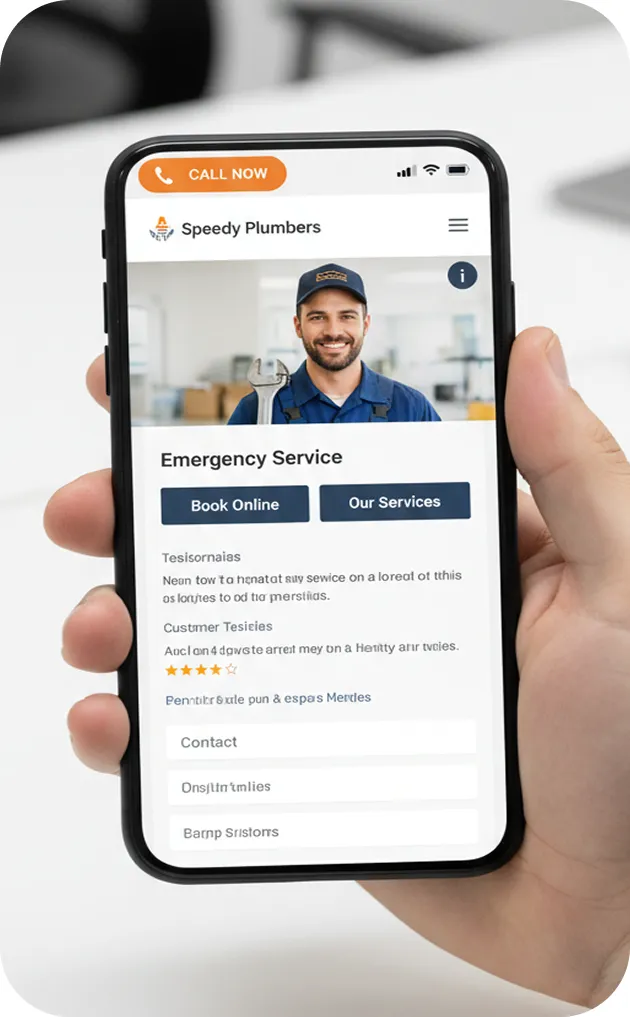
- Click-to-call buttons on mobile devices
- Sticky contact bar at the top of the page
- Simple forms (name, phone number, and issue only)
- Urgency messages like “Available 24/7 Emergency Service.”
- Removing distractions such as unnecessary links or clutter
Even small changes like these can significantly improve conversion rates in the plumbing industry by reducing friction and encouraging faster action.
Landing Page Strategy for High-Intent Plumbing Leads
Not all website pages should serve the same purpose. High-intent search traffic needs dedicated landing pages designed specifically to convert visitors into leads.
Is your website design outdated when it comes to converting visitors into leads? Create separate pages for services like emergency plumbing, drain cleaning, water heater repair, and leak detection.
Each page should focus on one service, clearly address the customer’s problem, include a strong CTA above the fold, and minimize navigation distractions to keep users focused on taking action.
Mobile Optimization for Plumbing Lead Generation
Most plumbing searches happen on mobile devices, often in urgent situations. If your mobile experience is slow or difficult to use, you will lose potential leads even if your SEO is strong.
Common issues include small text, hard-to-click phone numbers, slow loading, and pop-ups blocking content. To improve conversions, ensure click-to-call buttons are always visible, pages load in under 3 seconds, layouts are simple and vertical, and fonts are easy to read. Mobile users need fast, immediate access to help.
Fixing Your Content Strategy
Content plays a key role in both SEO and conversions, not just rankings. Weak content usually focuses too much on the company and fails to address what the customer actually needs.
Stronger content focuses on customer problems, uses simple explanations, includes real-life plumbing scenarios, and naturally guides users toward booking a service. Instead of acting like a brochure, your website should function like a helpful, problem-solving guide.
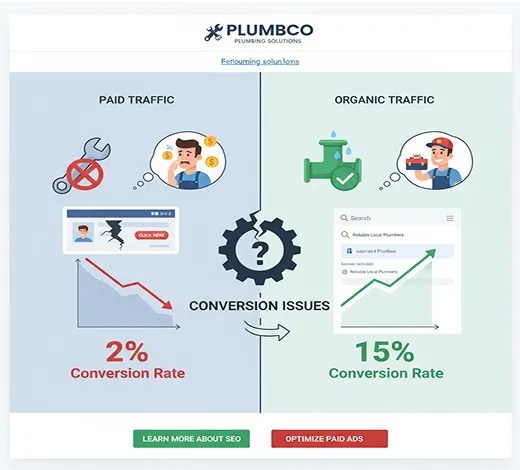
Paid Traffic vs Organic Traffic Conversion Issues
Paid traffic often brings colder audiences that need stronger persuasion, while organic traffic usually has higher intent but still requires trust and clarity to convert.
Sometimes, low conversions are not caused by website design, but by a mismatch between traffic source and user expectations.
If paid traffic is not converting, improve landing page relevance, align ad messaging with page content, and add stronger urgency and offers.
If organic traffic is underperforming, focus on deeper service pages, better intent matching, and stronger trust signals.
Tracking & Analytics
Without proper tracking, it is impossible to understand why visitors are not converting. You need clear data to identify where users drop off and what is failing.
Key metrics to monitor include bounce rate, time on page, conversion rate (calls and forms), mobile vs desktop performance, and top exit pages.
Tools like Google Analytics and call tracking help reveal these patterns, turning guesswork into data-driven optimization.
Competitor Analysis
Your competitors are often already applying strategies that work, so ignoring them can put your website at a disadvantage. Reviewing how they structure service pages, present CTAs, highlight offers, and build trust can reveal important gaps in your own site.
Ask simple but critical questions: why would a customer choose them over you, and what are they showing that you are not? Use these insights to improve your website based on real market gaps instead of assumptions.
Technical SEO Issues That Hurt Lead Generation
Even with strong content and design, technical SEO issues can silently reduce your lead generation performance. Problems like broken links, slow loading speed, poor Core Web Vitals, missing meta tags, and duplicate content can all hurt visibility and user experience — and are often part of the broader website problems small plumbing businesses face when trying to compete online.
Fixing these issues ensures your site is both easy to find and easy to use. A fast, stable, and technically clean website immediately improves trust and increases the chances of converting visitors into leads.

Quick Fix Checklist
Here’s a simple, quick-action checklist of the most important fixes you can apply to immediately improve your plumbing website’s conversions and lead generation.
- Add strong CTAs on every page
- Improve mobile click-to-call functionality
- Optimize service pages as landing pages
- Add reviews and trust signals
- Improve page speed
- Fix local SEO gaps
- Simplify contact forms
- Align content with user intent
- Track conversions properly
Start with these before doing anything advanced.
Conclusion
A plumbing website that gets traffic but no leads is not a traffic problem—it is a conversion problem.
Most of the time, the issue comes down to unclear messaging, weak trust signals, poor UX, and lack of intent alignment.
The good news is that these problems are fixable without increasing traffic. By improving your service pages, strengthening CTAs, optimizing for mobile users, and aligning content with real customer intent, you can turn existing traffic into consistent leads.
In the plumbing industry, small improvements in clarity and trust can lead to big increases in phone calls and bookings.