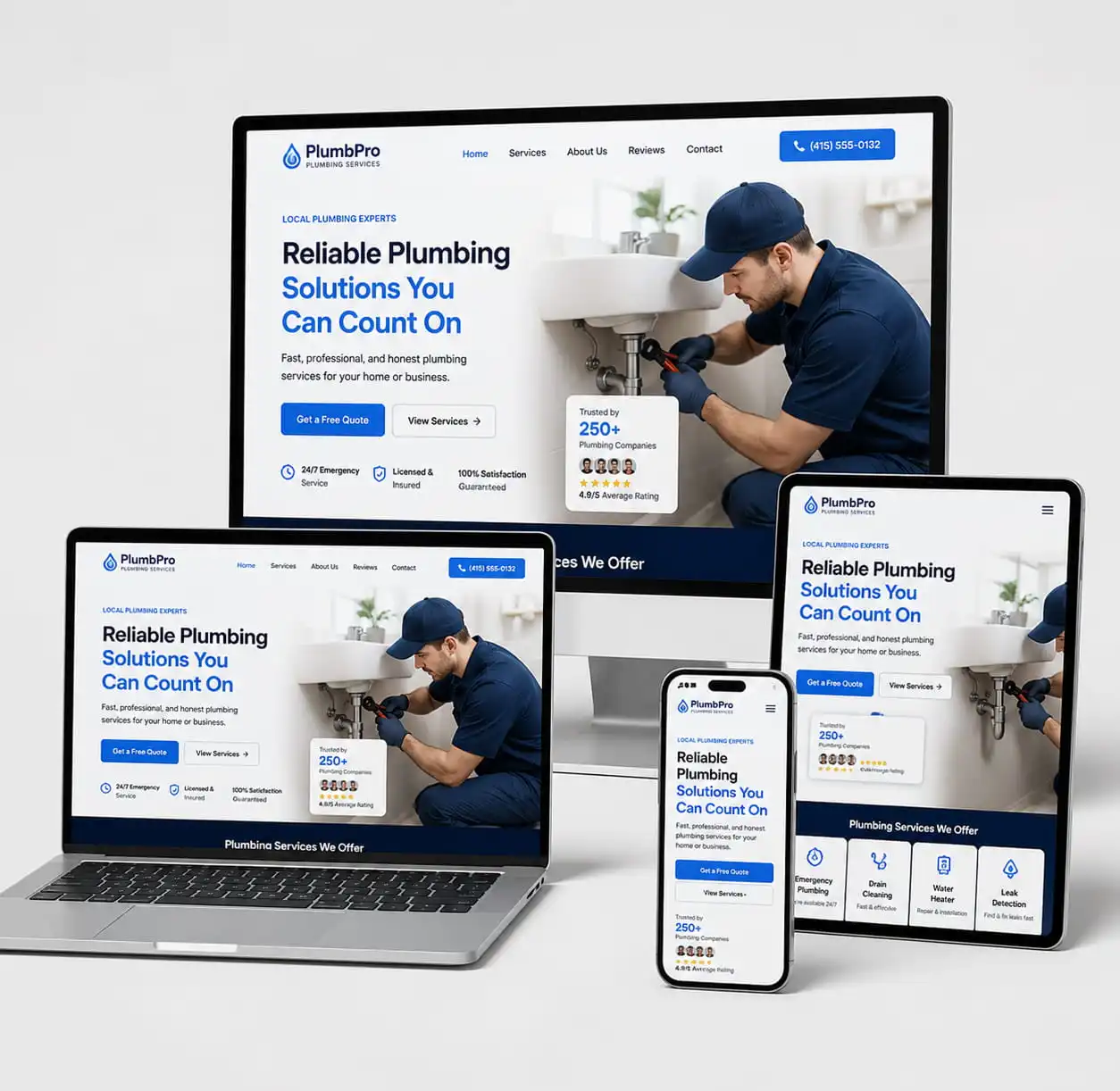
Most plumbing websites struggle with basic design problems that directly affect user experience. Pages feel cluttered, buttons are hard to find, and important information is often buried under too much content. This is especially common in website design for plumbers that are not built with users in mind.
Users also face issues with poor structure and unclear layouts. On mobile, especially, text can be difficult to read, contact options are not obvious, and navigation feels confusing instead of helpful.
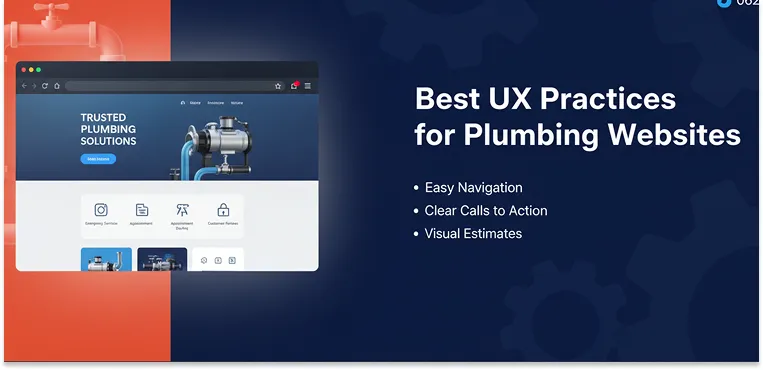
This guide will walk through the best UX practices for plumbing websites, focusing on simple, clean, and user-friendly design that makes it easy for people to understand services and take action quickly.
What Defines Modern UX for Plumbing Websites?
Modern UX for plumbing websites is all about helping users take action quickly, especially in urgent situations. It should be simple, clear, and easy to use.
Key points include:
- Clear services shown instantly
- Easy “Call Now” or “Book” buttons
- Mobile-friendly design for fast use on phones
- Simple navigation with no confusion
- Quick contact options with minimal steps
- Trust signals like reviews and real photos
In short, modern plumbing UX removes delays and makes it very easy for users to get help fast.
Core UX Principles for High-Converting Plumbing Websites
High-converting plumbing websites are built on simple, clear, and fast UX. The main goal is to help users take action quickly, especially in urgent situations.
Each page should have one clear goal, like booking a service or making a call. Buttons such as “Call Now” or “Get Quote” should be easy to see, and the design should not distract users.
Trust and simplicity matter a lot. Reviews, real photos, and certifications build confidence, while mobile-friendly design and short forms make it easy for users to contact you in seconds.
Mobile-First UX Optimization for Plumbing Leads
Most plumbing customers search on their phones, often in urgent situations. That’s why a mobile-first UX is very important to get more leads.
Good mobile design means fast pages, sticky “Call Now” buttons, simple scrolling, big tap-friendly buttons, click-to-call or WhatsApp, and short forms. This makes it easy for users to contact a plumber instantly.
Website Speed Optimization and Its Impact on Conversions
Website speed is very important for plumbing websites because users are often in urgent need. If the site is slow, they leave quickly and choose another plumber.
A fast website loads pages quickly and makes it easy for users to find services and contact options. This improves trust and keeps users engaged.
To improve speed, use compressed images, simple design, caching, and fewer heavy scripts. A faster site means more calls, more bookings, and better conversions.
High-Converting Homepage UX Structure
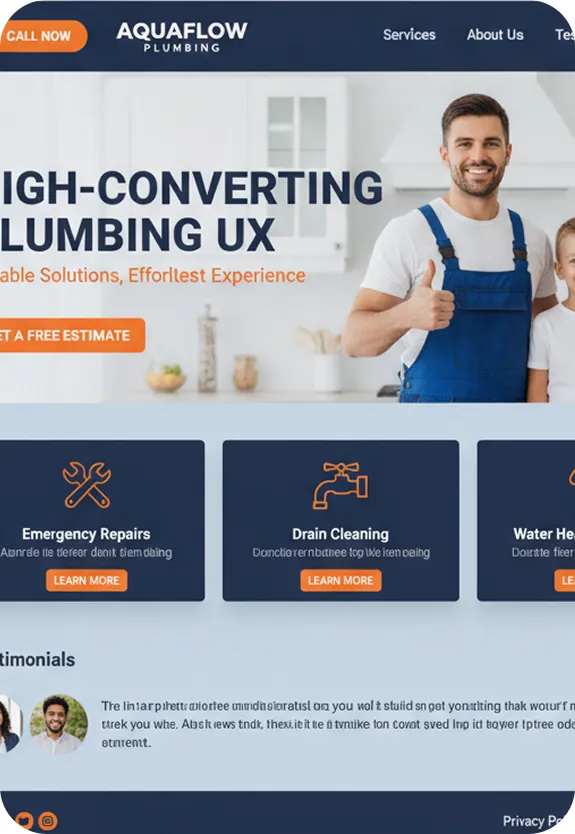
A high-converting plumbing homepage is designed to guide visitors quickly from confusion to action. It should answer key questions fast and make contacting you effortless.
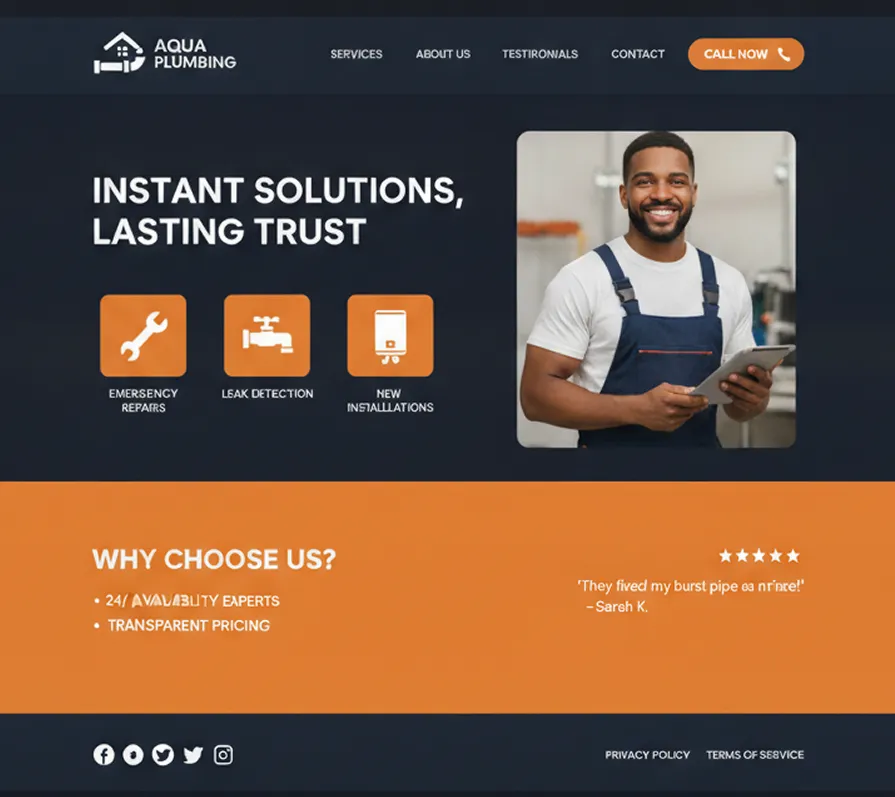
A strong homepage structure includes:
- Clear headline at the top – What you do and where you work
- Visible emergency CTA – “Call Now” or “Book Service” above the fold
- Quick service overview – Simple list of main plumbing services
- Trust signals early on – Reviews, ratings, and certifications
- Service area clarity – Show where you operate locally
- Simple contact section – Easy ways to call, message, or book
In short, the homepage should act like a quick guide that builds trust fast and pushes users toward taking action without delay.
Service Page UX Best Practices for Plumbing Websites
Service pages are where decisions happen. Whether it’s pipe repair, drain cleaning, or boiler installation, each service page must be clear and action-focused.
Best practices include:
- One service per page (no mixing)
- Clear explanation of the service in simple language
- Common problems and solutions
- Pricing guidance (if possible)
- Strong CTA repeated multiple times
- Local relevance (city/area mentions)
A well-structured service page helps users feel confident before contacting you.
Navigation Design That Improves Lead Flow
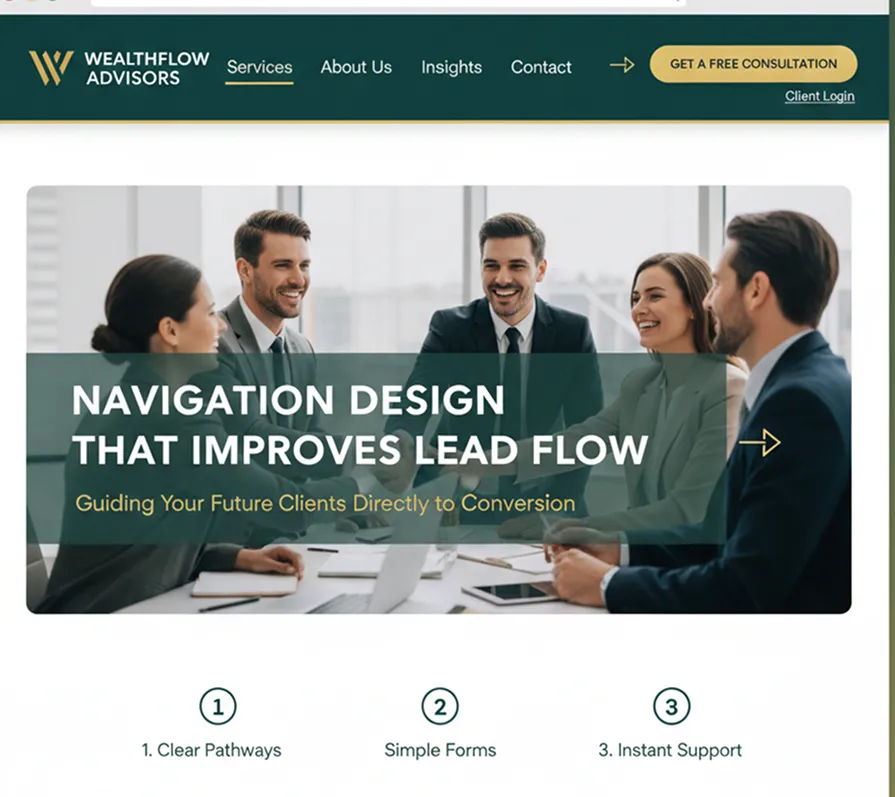
Good navigation on a plumbing website should be simple and easy to understand. Users should quickly find important pages without effort.
Keep the menu minimal. Include only key items like services, contact, and emergency plumbing. A sticky header with a clear “Call Now” button helps users take action anytime.
Overall, creating clean navigation reduces confusion and guides users smoothly toward booking or contacting the business in just a few clicks.
Trust Signals That Increase Conversions (EEAT Focus)
Trust is the most important factor in turning plumbing visitors into real customers. People need to feel sure that your business is real, experienced, and reliable.
Strong trust signals include reviews, certifications, years of experience, real team photos, case studies, and clear contact details. These also support EEAT (Experience, Expertise, Authority, Trustworthiness), which helps both SEO and conversions.
Conversion-Focused Call-to-Action (CTA) Design
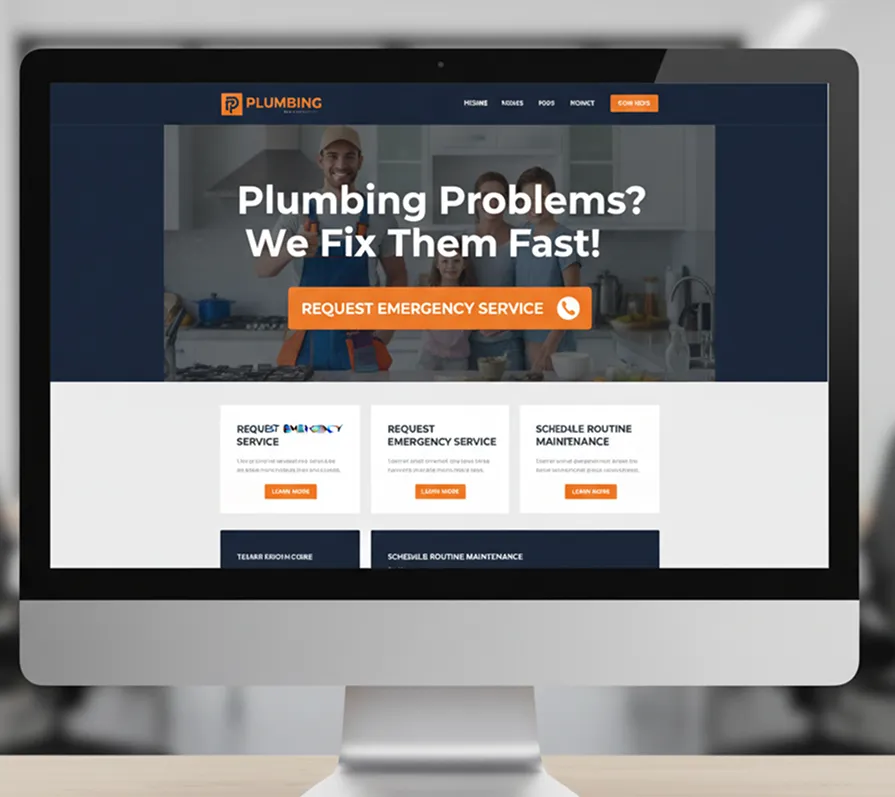
Call-to-action (CTA) design in plumbing websites should be clear, direct, and easy to notice. Users should instantly understand what to do next, especially in urgent situations.
CTAs like “Call Now,” “Book Service,” or “Get Free Quote” work best because they are simple and action-focused. They should be placed above the fold and repeated throughout the page so users never have to search for them.
Good CTA designed website actually gets you calls, by helping turn visitors into customers by removing confusion and making the next step obvious and quick.
Booking and Contact Form UX Optimization
A complicated form kills conversions. In plumbing, users want speed, not paperwork.
To optimize forms:
- Keep fields minimal (name, phone, issue, location)
- Add dropdown options for common plumbing problems
- Include auto-fill and mobile-friendly inputs
- Show confirmation message instantly
- Allow WhatsApp or instant messaging options
The easier the form, the higher the conversion rate.
Local SEO UX Integration for Plumbing Websites
Local SEO UX is about making sure users quickly understand where you work and how fast you can reach them. In plumbing, most searches are location-based, so clarity is very important.
Add service area details on key pages, use location-based headings, include a contact page with a map, and keep business information consistent across your site. This is similar to effective seo services for plumbers, where clarity and local targeting improve visibility and trust.
Also, connect your website with a properly optimized Google Business Profile so users can easily find reviews, location info, and contact details in one place.
Visual Design Elements That Improve Trust and Engagement
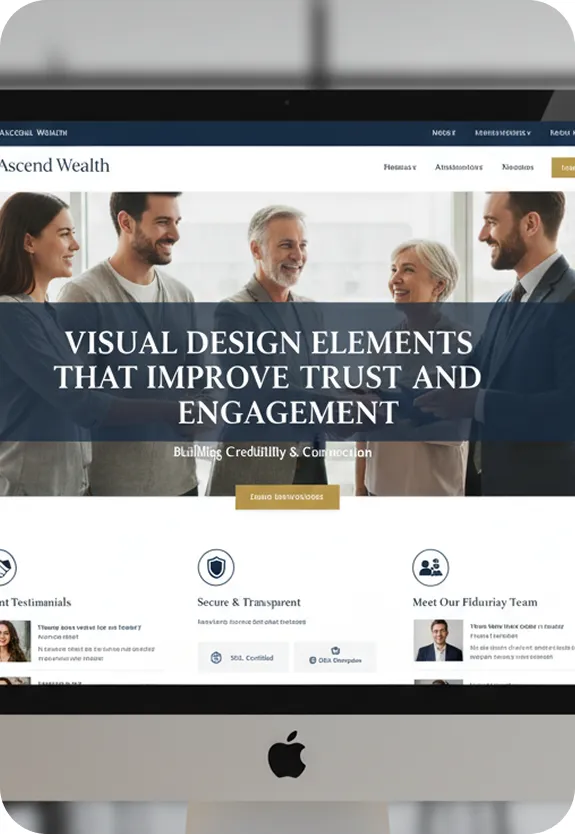
Visual design is not just decoration—it directly affects trust and readability.
Effective visual UX elements include:
- Clean layout with enough white space
- Consistent brand colors
- Real plumbing job photos
- Simple icons for services
- Before/after galleries
- Minimalistic design (avoid clutter)
Avoid overdesigned websites that slow down performance or distract users from booking.
Conclusion
Plumbing website UX is all about clarity, speed, and trust. Users don’t want complexity—they want fast solutions and easy booking options. A well-optimized UX design helps bridge that gap between search and conversion.
When you focus on mobile-first design, strong trust signals, fast performance, and clear call-to-actions, your website becomes more than just an online presence—it becomes a consistent source of leads and customers.
Ultimately, the best plumbing websites are not the ones that look the most advanced, but the ones that make it the easiest for people to take action.