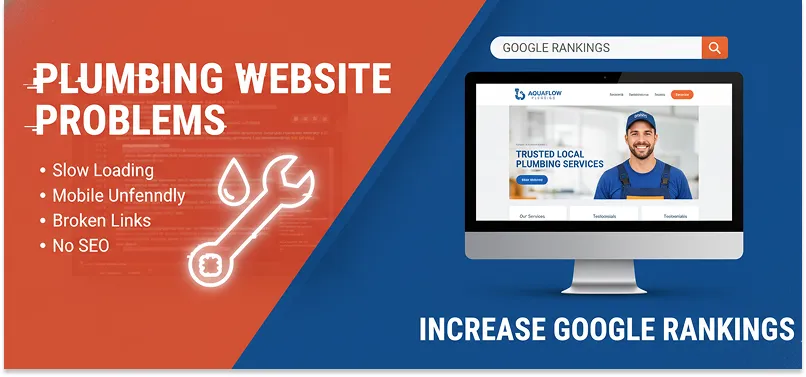
Many plumbing businesses struggle to rank on Google even after having a website. The issue is usually not the service, but the website itself.
Problems like slow speed, poor mobile design, weak SEO, and outdated content can push your site down in search results. These issues also make visitors leave quickly and choose competitors instead.
In this guide, you will learn the main plumbing website problems that reduce Google rankings. You will also get simple solutions to improve your visibility, traffic, and leads.
How Google Evaluates Plumbing Websites?
Google ranks plumbing websites based on how useful, fast, and trustworthy they are. It checks both technical performance and content quality.
It looks at key factors like website speed, mobile friendliness, local SEO, content quality, user experience, security, and backlinks. It also reviews how easy the site is to navigate and how users interact with it.
For plumbing businesses, local relevance is very important. Google prefers nearby, reliable companies that customers can easily contact.
If your website is weak in these areas, your rankings can slowly drop over time
Problems That Reduce Google Rankings
Many plumbing websites lose rankings because of small but critical SEO mistakes.
Below are the most common problems that reduce Google rankings and stop plumbing websites from getting more traffic and leads.
Slow Website Speed Problems
Slow website speed is usually caused by large images, poor hosting, too many plugins, or lack of caching, and it leads to higher bounce rates and lower Google rankings.
Fix it by compressing images, using better hosting, enabling caching, reducing plugins, and using a CDN to improve loading speed.
Poor Mobile Website Experience
Poor mobile experience happens when text is too small, layouts break, pages load slowly, or buttons are hard to tap, causing users to leave quickly.
Fix it with responsive design, faster loading, readable fonts, easy-to-click buttons, and by avoiding intrusive pop-ups.

Weak Local SEO Optimization
Weak local SEO means your plumbing website doesn’t appear in nearby searches, often due to missing location pages, inconsistent business details, or an unoptimized Google Business Profile.
Fix it by creating location pages, optimizing your Google Business Profile, keeping NAP details consistent, using local keywords, and collecting customer reviews.
Thin or Low-Quality Website Content
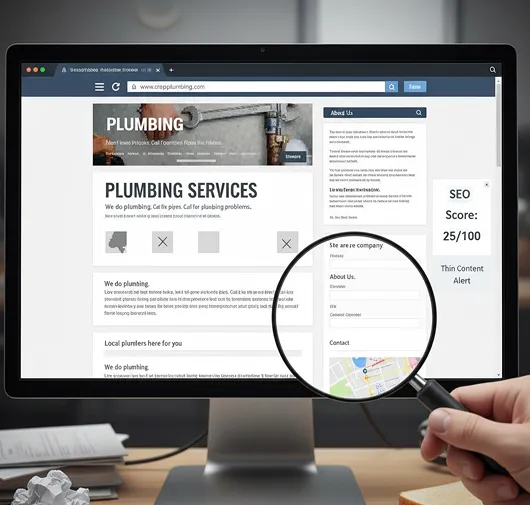
Thin content happens when pages don’t provide enough useful information, making it harder for Google to understand and rank your site. This often includes short service pages or copied text.
Fix it by writing detailed service pages, adding FAQs, explaining common plumbing problems, using simple, helpful language, and avoiding duplicate or low-value content.
Poor Website Structure and Navigation
If your website is hard to navigate, both users and Google struggle to find important pages. This can lower rankings and increase bounce rates.
Common issues include messy menus, missing internal links, and no clear structure between service pages. A clear structure helps users quickly find what they need.
- Use a simple menu structure for easy navigation
- Organize service pages properly
- Add internal links
- Keep important pages easy to reach
- Use a clear page hierarchy
Missing On-Page SEO Elements
Missing on-page SEO means Google can’t clearly understand what your page is about, often due to weak titles, missing meta descriptions, poor headings, or no image alt text.
Fix it by adding SEO titles, writing meta descriptions, using proper H1 and H2 headings, adding image alt text, and placing keywords naturally in the content.
Technical SEO Problems
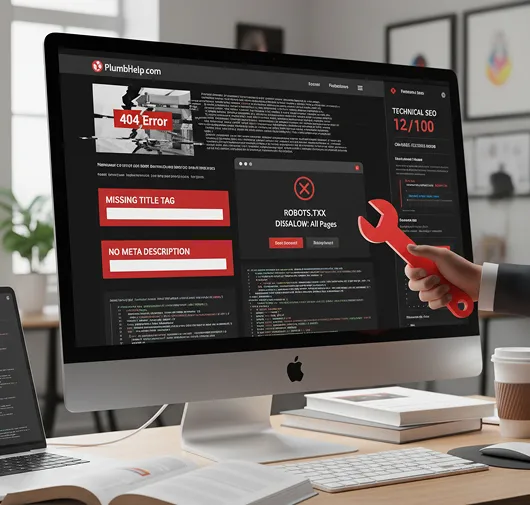
Technical SEO issues can prevent Google from properly crawling and ranking your website, even if your content is strong. Common issues include broken pages, crawl errors, missing sitemap, duplicate content, and slow indexing.
Fix it by submitting an XML sitemap, fixing broken links, improving site speed, using HTTPS, resolving crawl errors, and removing duplicate pages.
Weak Trust Signals and Low EEAT
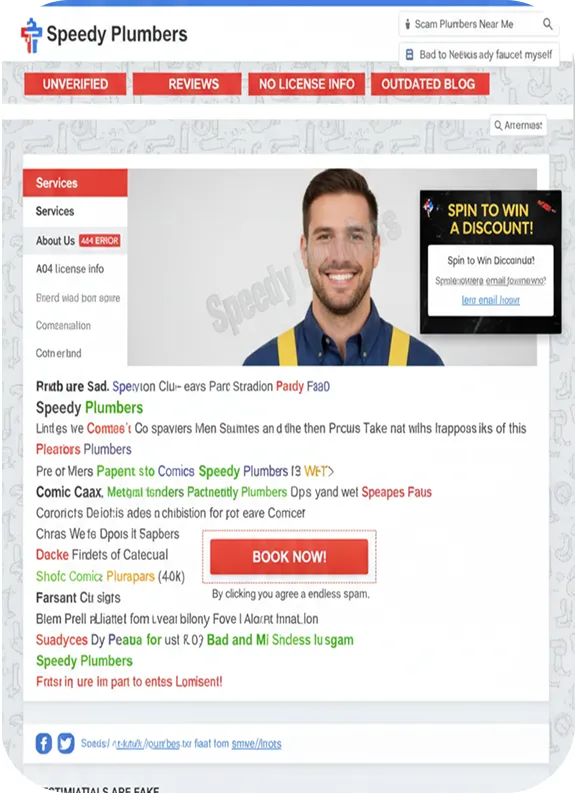
Weak trust signals make a plumbing website look unreliable, which can reduce both rankings and customer trust. Common issues include missing reviews, no certifications, unclear business details, and weak “About” information—this is where simple UX changes that can double plumbing leads often start with fixing trust elements first.
Fix it by adding customer reviews, showing licenses and certifications, writing a strong About page, displaying clear contact details, and adding real team photos.
Poor User Experience and Conversion Optimization
Poor UX leads to visitors leaving without contacting you, which also negatively affects SEO performance. Common problems include confusing layouts, weak CTAs, slow forms, and no clear way to call or book a service.
Fix it by adding clear call-to-action buttons, simplifying contact forms, improving layout, adding click-to-call options, and highlighting emergency services.
Outdated Website Design
An outdated website can make your plumbing business look less trustworthy. Visitors may leave quickly if the design looks old or unprofessional.
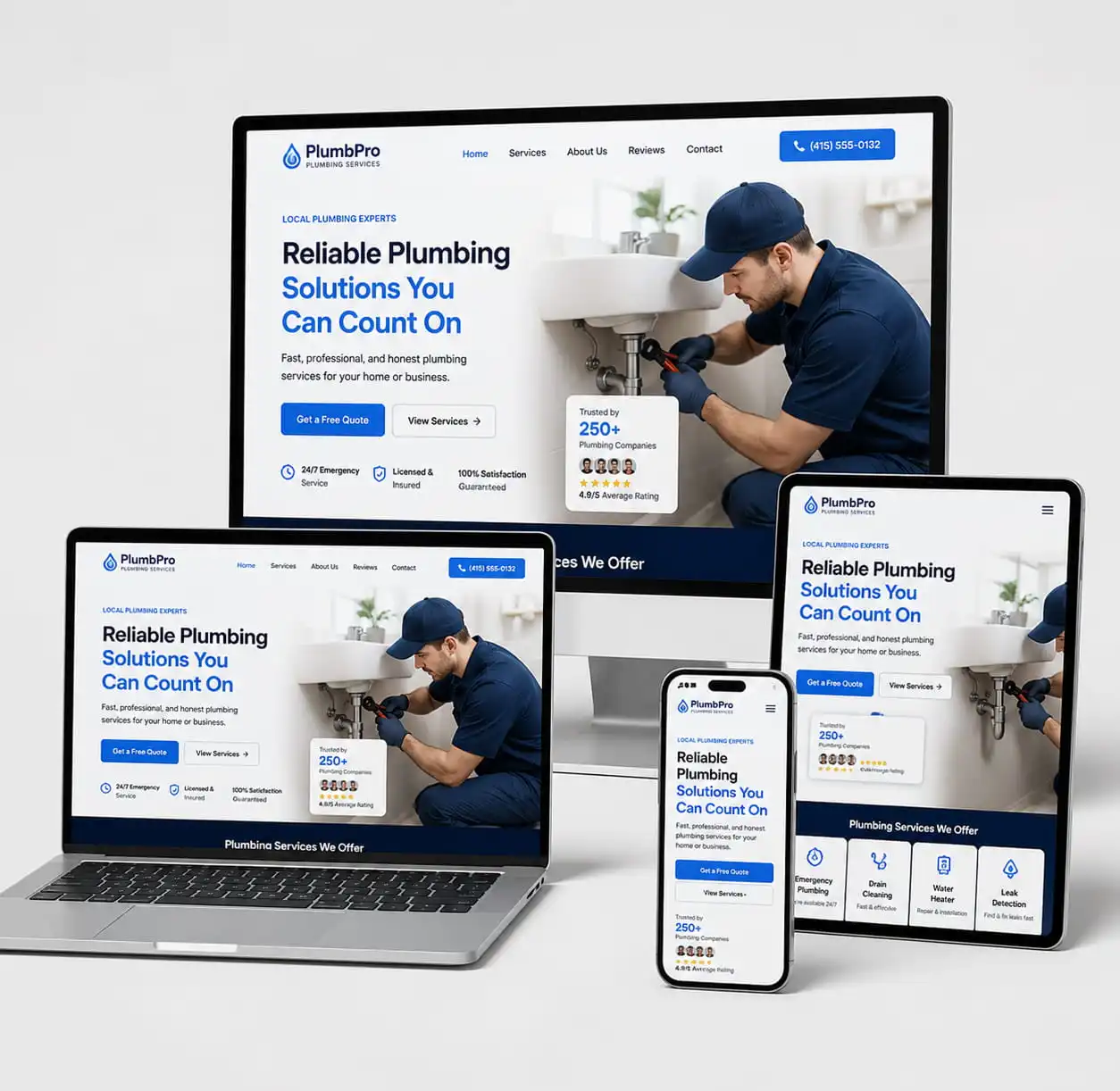
Common issues include old layouts, poor mobile design, low-quality images, and cluttered pages. A modern website design for plumbers builds trust and improves performance.
- Use a clean, modern layout
- Make it mobile-friendly
- Update fonts and colors
- Improve image quality
- Keep the design simple and clear
Lack of Content Updates
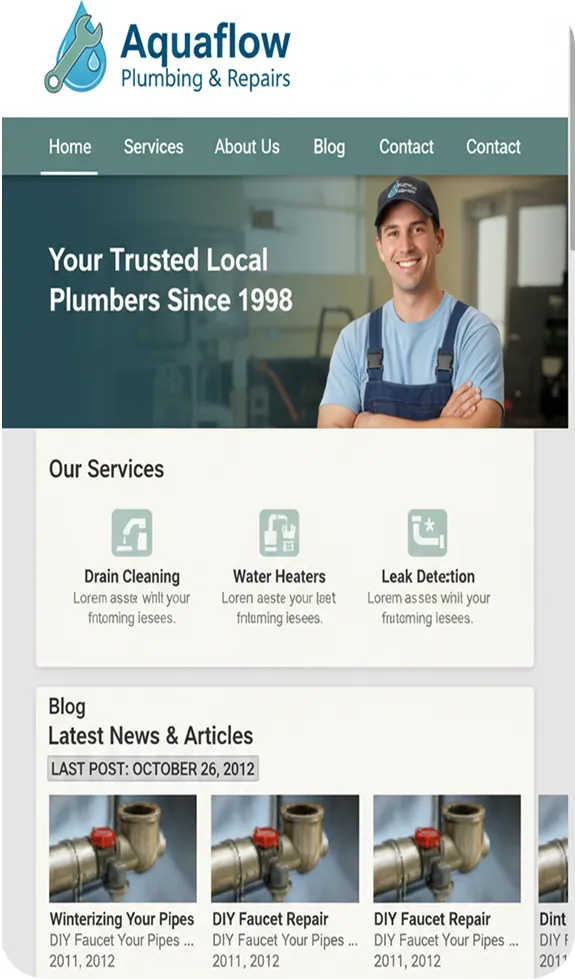
A website that is not updated regularly can look inactive to Google, which may reduce rankings over time. Common issues include outdated service pages, old information, and no fresh content being added.
Fix it by updating service pages, publishing new blog posts, refreshing old content, updating prices or offers, and adding new FAQs regularly.
No Blogging or Topical Authority Strategy
Without blogging, a plumbing website misses opportunities to rank for more keywords and build authority in the niche. Common issues include no blog section, limited topics, and no focus on customer questions or problems.
Fix it by writing helpful plumbing blogs, covering common customer questions, targeting local topics, sharing maintenance tips, and building internal links from blog content.
Weak Backlink Profile
Backlinks help Google trust your website. If your plumbing site has very few or low-quality links, it may struggle to rank.
Common issues include no backlinks, spammy links, or links from irrelevant websites. Good backlinks improve authority and rankings.
- Avoid spammy link building
- Get listed in local directories
- Build citations on trusted sites
- Earn links from local businesses
- Publish helpful content that others can reference
Ignoring SEO Analytics and Tracking
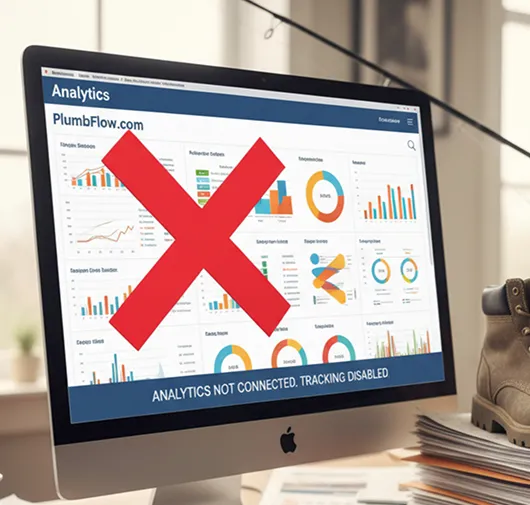
If you don’t track your website performance, you won’t know what is working or what is hurting your rankings. This can lead to missed opportunities.
Common issues include not using analytics tools, ignoring keyword data, and not checking website traffic or user behavior.
Tracking data helps you improve SEO with clear decisions.
- Use Google Analytics
- Set up Google Search Console
- Monitor keyword rankings
- Check traffic sources
- Track leads and conversions
How to Improve a Plumbing Website for Better Rankings
Improving plumbing website rankings requires a combination of SEO services for plumbers, content, technical optimization, and user experience improvements.
Key strategies include:
- Improve page speed
- Optimize for mobile users
- Build local SEO pages
- Create high-quality content
- Fix technical SEO issues
- Improve website navigation
- Add trust signals
- Publish blogs regularly
- Earn local backlinks
- Monitor SEO performance consistently
SEO is not a one-time task. Long-term optimization produces stronger and more sustainable ranking growth.
Conclusion
A plumbing website can either help your business grow or quietly reduce your visibility on Google. Many companies lose rankings due to slow speed, weak local SEO, outdated design, poor content, and technical SEO issues.
Google prefers websites that are helpful, fast, easy to use, and trustworthy. Businesses that focus on SEO, content quality, and user experience usually see better rankings and more leads over time.
By fixing these common website problems plumbers face, businesses can improve search visibility, attract more local customers, and get more calls and service requests from Google Search.